Untangling the Mess: 5 Dataflow and Pipeline Issues Causing Data Spaghetti
Businesses are often held together by scattered data and disconnected systems, creating a tangle of information – or what we like to call data spaghetti. This can affect operations across the entire organisation.
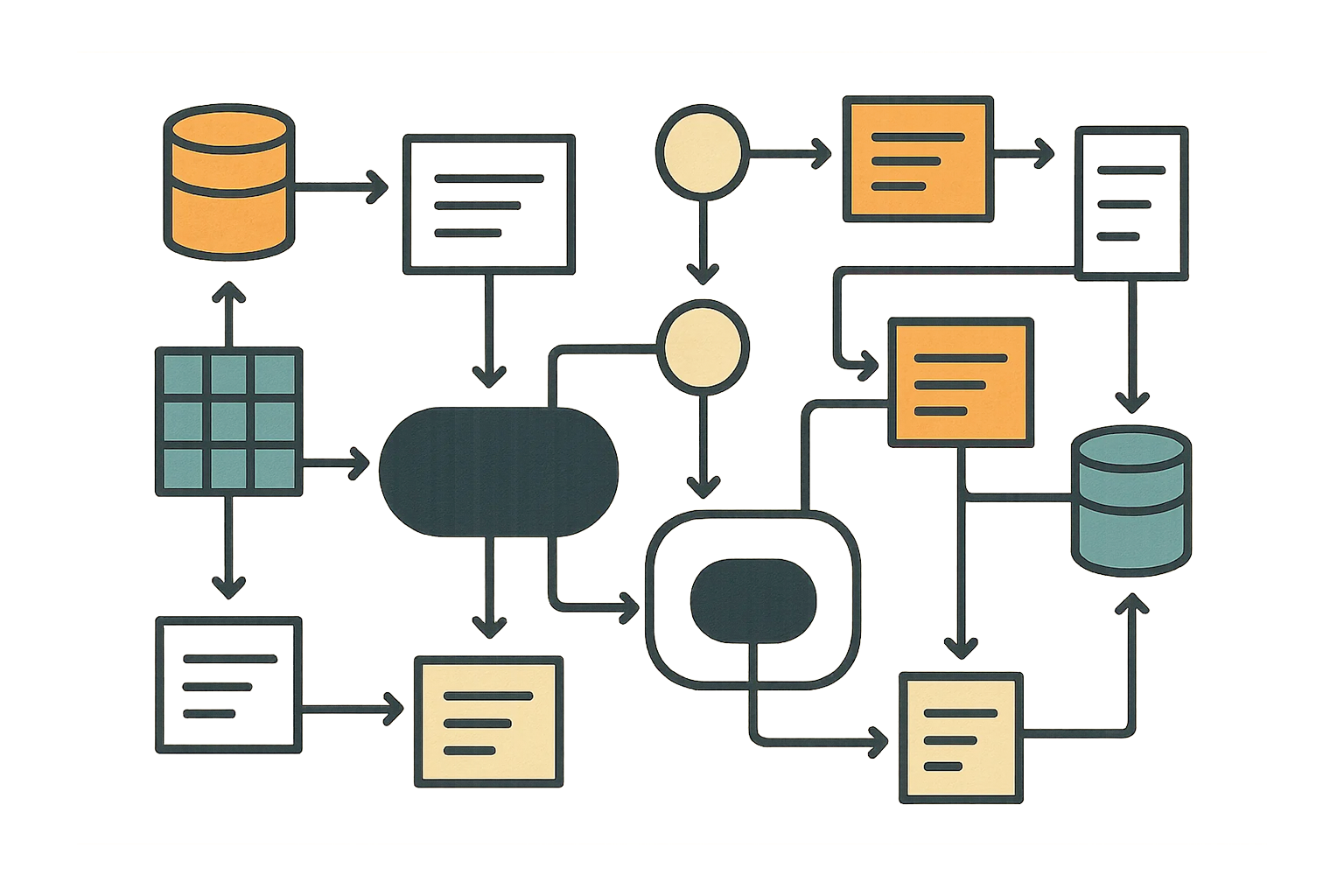
At GoodShip, we can help you untangle the mess and map out a clearer path to building time- and cost-saving systems and processes.
Whether it's no-code, low-code, custom or hybrid solutions, we’ll work with you to understand the challenge and recommend the right approach for your operational needs.
1. Data Silos and Fragmentation
**The Problem:**Many organisations operate with disconnected systems (e.g. CRMs, finance software, spreadsheets), causing fragmented data that's difficult to reconcile or report on.
Support:
- System integration through custom APIs or middleware to unify data sources.
- Centralised data lakes or warehouses to bring everything together.
- Automated synchronisation to keep data consistent across platforms.
Benefits:
- Provides a smoother user experience by eliminating the need to jump between systems.
- Saves time and reduces confusion through a single source of truth.
2. Manual, Time-Consuming Data Handling
The Problem: Manual data entry, cleansing, and reporting waste valuable staff time and increase the risk of error.
Support:
- Automated data pipelines to perform Extract, Transform, Load (ETL) processes.
- Scheduled tasks and triggers to run regular jobs without intervention.
- Error handling and data validation to reduce manual fixes.
Benefits:
- Frees up staff time for higher-value tasks.
- Reduces cognitive load and frustration associated with repetitive admin work.
3. Delayed or Outdated Insights
The Problem: Data is often processed in batches or via outdated reports, which limits the ability to make timely decisions.
Support:
- Real-time dashboards using tools like Power BI, Looker or custom front-ends.
- Event-driven architecture for faster processing when key business events occur.
- Streaming data pipelines for instant insights.
Benefits:
- Supports faster decision-making and proactive action.
- Enhances the user experience for decision-makers, with up-to-date data at their fingertips.
4. Poor Data Quality and Governance
The Problem: Inaccurate, duplicate or incomplete data leads to flawed reporting, poor customer experience and compliance risks.
Support:
- Data cleansing and validation routines to maintain quality.
- Master data management to ensure consistency across systems.
- Automated compliance tools (e.g. GDPR checks, audit trails).
Benefits:
- Reduces rework and improves trust in data.
- Supports better time management by avoiding time spent on fixing errors.
5. Inflexible or Outdated Systems
The Problem: Legacy systems are difficult to scale or integrate with newer tools, blocking innovation.
Support:
- Legacy system modernisation via cloud migration or API layers.
- Custom microservices that extend functionality without full system replacement.
- Low-code/no-code tools to empower non-technical staff to build automations.
Benefits:
- Improves the overall experience for users, especially those frustrated by outdated tools.
- Helps teams work more efficiently by enabling easier, faster interactions with systems.
Unraveling the spaghetti
If you are interested in learning more please call us now 0151 272 3451 or contact us via hello@goodship.agency to book a review meeting to discuss your scope requirements.
Gavin Sherratt
GoodShip*