A moment
A photograph of something that mattered.

GoodShip* Activation
Don’t just tell people what happened.
Let the people who were there help tell the story.
An event happens.
The photographer captures it.
The organiser writes the post.
A highlight film appears.
A few quotes are chosen.
And that becomes the story.
But hundreds of other perspectives existed in the room.
Fableit is a GoodShip* experiment in participatory storytelling: a way of helping the people inside an experience contribute to how that experience is remembered.
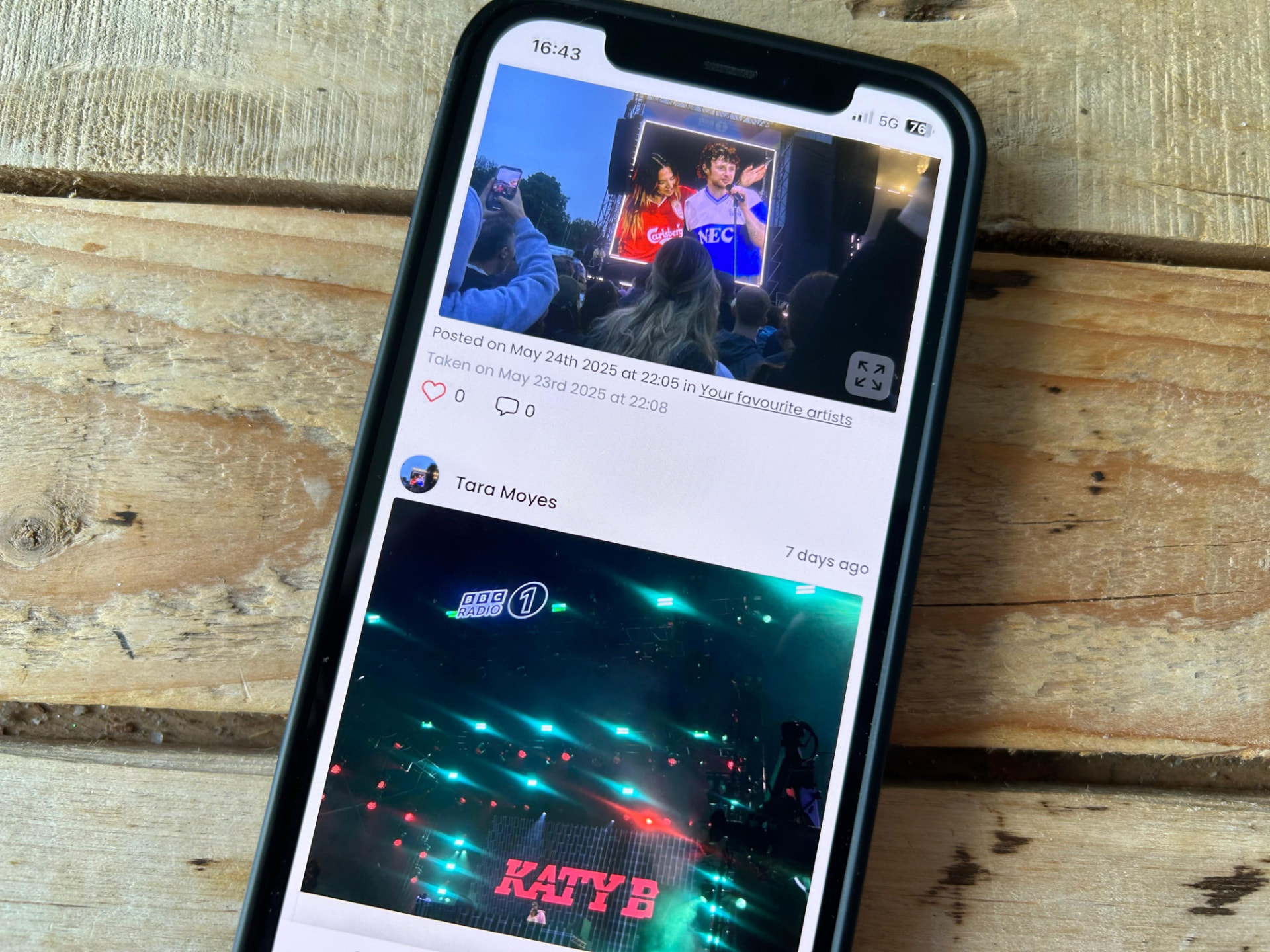
Put 100 people into the same event.
They won’t experience the same event 100 times.
One person remembers the speaker. Another remembers the person they met afterwards.
Someone photographs the venue. Someone else photographs a scribbled note.
One participant leaves inspired. Another leaves questioning something they believed before.
The official content captures one perspective.
Fableit asks: what happens if the audience becomes part of the storytelling team?
One event. Many perspectives. A richer story.
Traditional event content usually flows in one direction.
Fableit changes that relationship.
Traditional
Organiser
captures the experience
Experience
is documented and published
Audience
receives one version of it
Participatory
Organiser
creates an experience
Participants
experience it
Participants contribute
images, words, reflections, observations, perspectives
Shared story
emerges from multiple viewpoints
Fableit is a participatory storytelling product created by GoodShip* that enables people taking part in events, programmes and experiences to contribute their own perspectives, stories and content.
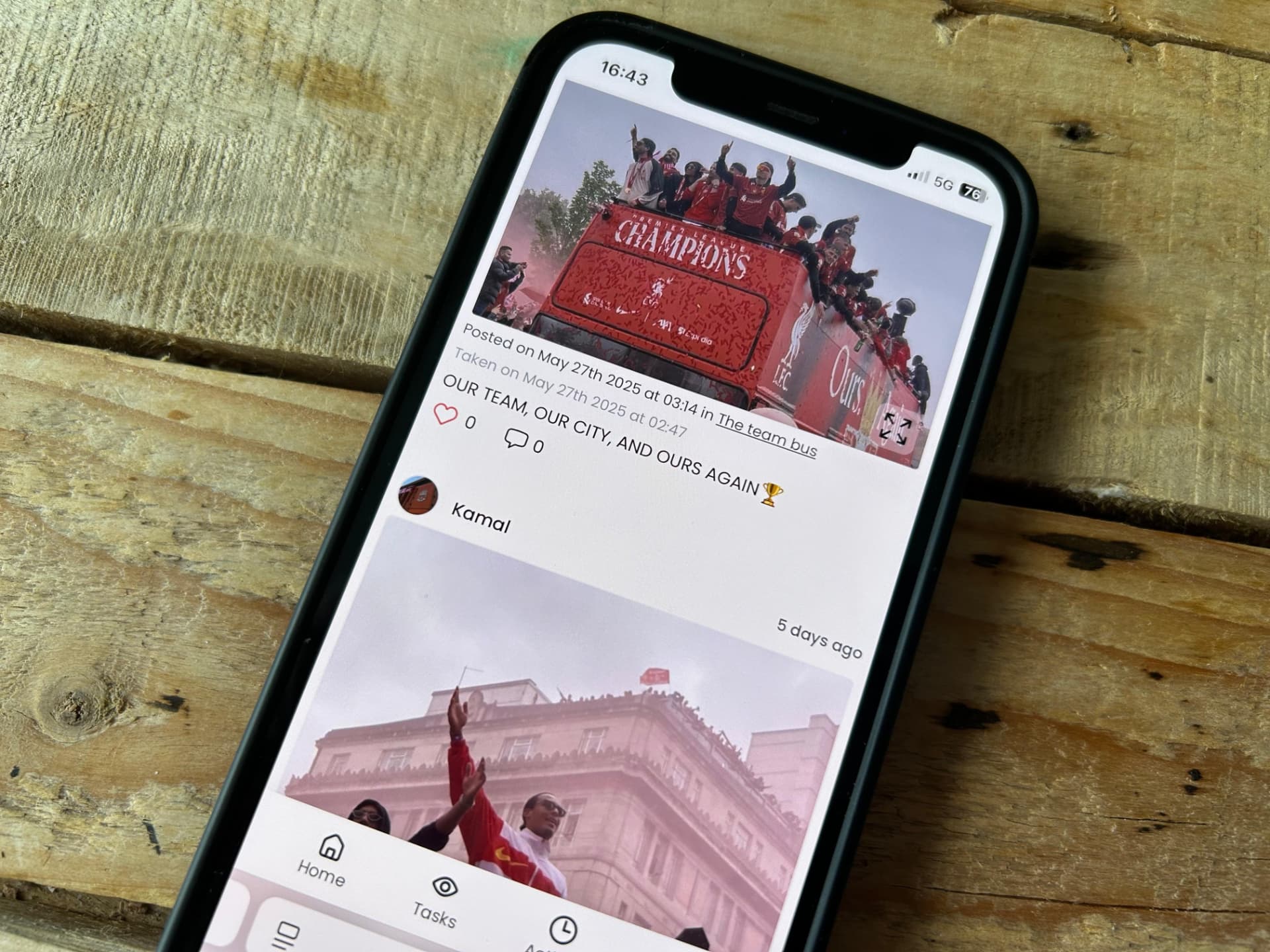
When organisations document their own activity, they tend to capture speakers, branding, crowds, programmed moments, formal outcomes.
Participants might notice friendships, conversations, details, unexpected moments, emotions, questions, personal significance.
Neither perspective is necessarily more accurate. They’re different.
Fableit is interested in what happens when those perspectives sit alongside each other.
The stage is part of the story. The room is too.
Fableit helps organisations move beyond documenting an experience only from the organiser's perspective by including the voices and viewpoints of participants.
The technology should disappear behind the act of noticing something worth sharing.
Contributions
A contribution doesn’t have to be a photograph. Sometimes a sentence, a question or an object says more about what an experience meant.
A photograph of something that mattered.
A short reflection.
Something heard during the experience.
Something the experience made them wonder.
A person or conversation that mattered.
Something they will take away.
Sometimes the most interesting photograph isn't a person. A notebook. A prototype. A detail. Something participants noticed.
What did the experience actually feel like?
Fableit isn’t about asking everybody to create more content because organisations want more posts.
The invitation should have purpose.
A good prompt changes the quality of what people contribute.
Don't ask people to create content. Give them a question worth answering.
Fableit is designed for experiences where the perspective of the people taking part matters as much as the programme itself.
Capture an event through the perspectives of:
Create a participant-led record beyond:
Capture:
Let participants reflect on:
Participants could document the experience from:
Create space for people to represent their own experiences:
Capture how audiences interpret:
Use participant voices to understand:
Fableit & impact
Organisations increasingly need to demonstrate impact.
Those measures are important. But quantitative evidence rarely captures the entire experience.
Fableit could add another layer. That does not replace formal evaluation. It complements it.
What formal evaluation captures
What participant perspectives can reveal
Data can tell you what changed. Stories can help explain what that change felt like.
Fableit & AI Activator
AI Activator provides a natural environment for participatory storytelling.
The official GoodShip* view can capture the programme.
Participants can capture what it felt like from inside it. Those two perspectives together could create a much richer picture of the experience.
What a five-day programme contains
A potential participant journey
Fableit & events
Professional photography and film remain valuable. Fableit is not intended to replace them.
A professional photographer creates quality, consistency, craft, coverage.
Participants create something different: proximity, spontaneity, perspective, intimacy.
The most interesting model may be both.
Professional story + participant story = a fuller experience.
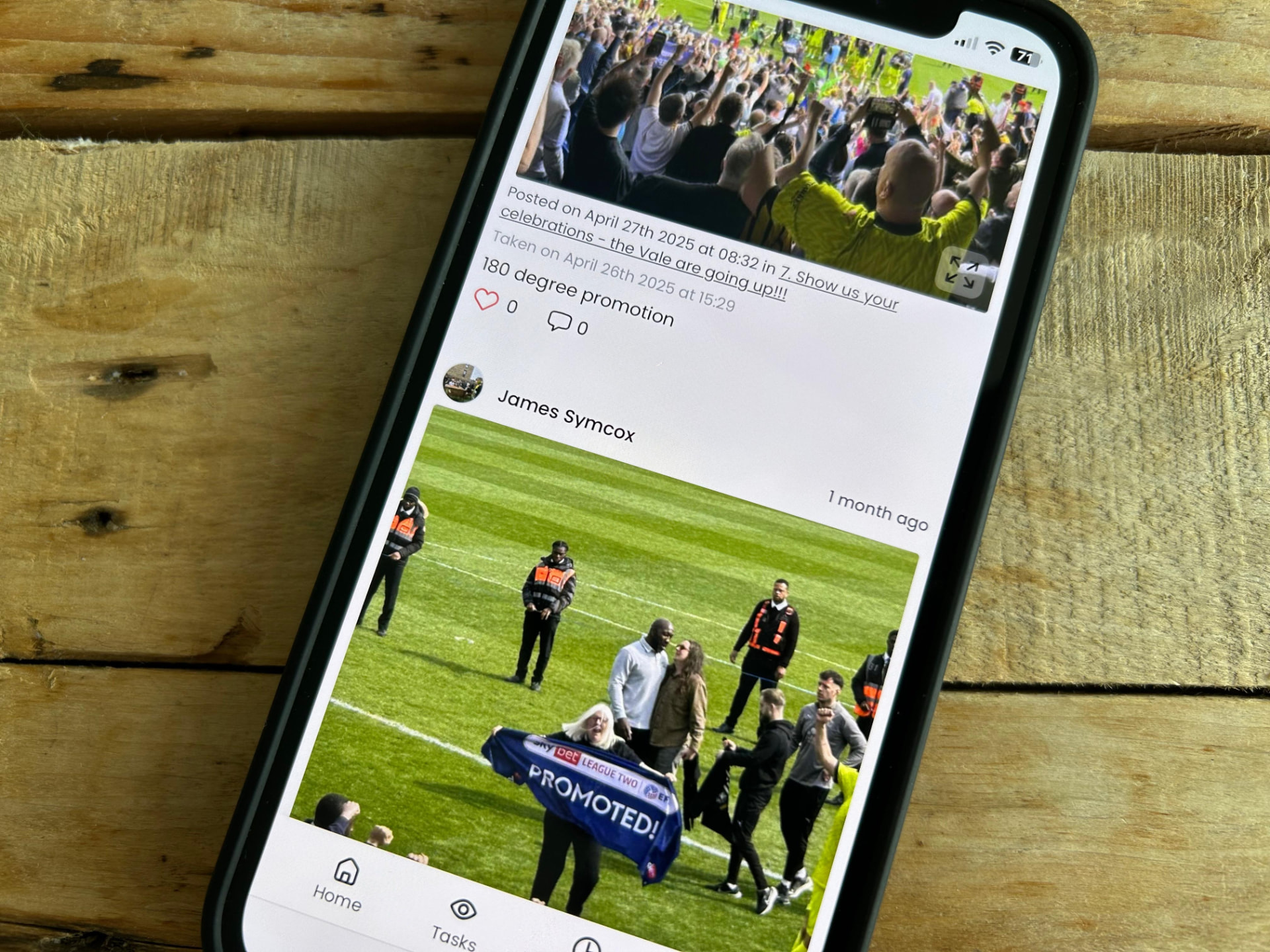
There is an important difference between telling stories about a community and creating ways for a community to tell its own stories.
Fableit gives GoodShip* somewhere to explore that distinction.
That could become particularly useful across community programmes, charities, place-based initiatives, youth engagement, education, social impact.
The product should be designed with care around consent, representation, ownership, privacy, moderation.
Participation should create agency, not simply more content for the organiser.
The prompt
Fableit could be built around prompts that help participants notice or reflect on something specific.
Event
“What will you remember tomorrow?”
Conference
“What idea changed how you're thinking?”
Community
“Show us something people outside this community might not notice.”
Education
“What can you do now that you couldn't do before?”
Innovation
“What surprised you?”
Impact
“What changed for you?”
The prompt can become part of
Participatory content still needs context, structure, curation, interpretation.
The value of Fableit should not be measured by how many uploads we got. The stronger question is: what did the contributions help us understand?
That could result in:
Capture widely. Curate thoughtfully.
Product principles
Contribution should require minimal explanation.
Participation should be invited, not forced.
The interface should support expression rather than make technology the focus.
People should understand what they are contributing, where it may appear and how it may be used.
Consent and representation matter.
Not everything submitted needs to be published.
Every activation should answer one question: why are we asking people to contribute?
Trust & sources
Any participatory storytelling platform needs careful handling of personal data, photographs, video and permissions.
Fableit should make contribution terms understandable. Not buried in legal language people never read.
What needs careful handling
What the product may need
People should know what happens to the story they share.
Depending on the activation, Fableit could create:
Fableit brings together several parts of GoodShip*.
It is another example of GoodShip* building something to explore its own thinking rather than only advising others to do so.
People before content. Participation before promotion.
AI & Fableit
As Fableit develops, AI could help curators work with large collections of material.
But there should be a clear boundary.
The underlying story belongs to the people who contributed it.
Classify
Sort contributions by type, prompt, theme or context.
Identify themes
Surface what participants returned to again and again.
Summarise
Make large collections navigable for curators.
Suggest relationships
Connect contributions that speak to each other.
Find patterns
Help curators notice something they might have missed.
What AI should not do
Use AI to help find the pattern. Keep the human meaning intact.
Fableit suits any organisation whose experiences are shaped by the people taking part in them.
Create richer participant-led event stories.
Capture:
Help participants and communities contribute their own perspective.
Capture:
Explore audience interpretation and experience.
Support participatory storytelling around:
See the human experience alongside quantitative programme outcomes.
Formats
A Fable can cover one evening, a five-day programme or an entire place.
A lightweight experience around one event. Participants respond to a small number of prompts.
Content is gathered across several days or sessions.
Focused on capturing qualitative perspectives around a defined outcome.
Capture different perspectives of a place.
Designed around a particular experience or research question.
Start with one prompt and one experience. Learn from what comes back.
Being clear about what Fableit isn’t keeps the product honest about what it is for.
Participation should have more purpose than collecting posts.
Professional and participant perspectives serve different purposes.
People are contributors, not free content suppliers.
Participant stories can enrich evaluation but should not replace appropriate evidence.
Some stories may be private, internal, anonymised or limited to the participant group.
Sometimes an imperfect photograph or sentence contains the most useful perspective.
The idea is intentionally evolving.
Questions we want to explore include:
Fableit gives us somewhere to test those questions.
Make it. Use it. Learn what the participants teach us.
Cases & experiments
Initially, this section uses experiments rather than polished case studies. Each one records what we tried and what participants taught us.
As the product matures, these experiments can develop into formal case studies.
Where Fableit can travel
Fableit isn’t geographically dependent.
It can potentially be used wherever people come together around events, learning, culture, community, work or shared experiences.
The context changes. The question stays similar.
What did the people inside the experience see that the organiser might have missed?
Storytelling, curation and participatory creative work across GoodShip*.
How we design the contribution experience behind participatory storytelling.
Building participation that creates agency rather than more content.
Maybe you’re running an event, a programme or a conference.
A community initiative. A learning experience. A cultural project.
You can tell people what happened. Or you can create a way for the people who were there to help tell you.