Liverpool City Region businesses can access low-carbon innovation support until 2027
LCEI has secured new funding to help Liverpool City Region businesses reduce carbon, improve efficiency and explore new opportunities through university-led research and innovation.

Liverpool City Region businesses can access low-carbon innovation support until 2027
There is more support available for Liverpool City Region businesses looking to reduce carbon, improve efficiency and explore new opportunities around sustainability.
The Low Carbon Eco Innovatory (LCEI) has secured new funding from the Liverpool City Region Combined Authority, extending the programme until March 2027.
And this next phase is particularly interesting because it isn't just about installing greener technology.
It is about connecting businesses with researchers, academics and students from Liverpool John Moores University and the University of Liverpool to tackle real sustainability and innovation challenges.
For businesses that know they need to become more sustainable, but aren't necessarily sure where to begin, that could be a useful route into expertise that might otherwise feel difficult to access.
More than carbon reduction
Sustainability can sometimes get reduced to a conversation about measuring emissions.
That matters, but for businesses the opportunity is much broader.
Reducing energy use can reduce costs.
Changing a process can improve productivity.
Research can identify opportunities for new products.
New technology can create competitive advantage.
And working with universities can give smaller businesses access to skills, knowledge and research capacity they would struggle to build internally.
That is the thinking behind the next phase of LCEI.
Support can include:
sustainability strategies
carbon assessments
carbon reduction strategies
collaborations with academics
student projects
low-carbon research and development
bespoke research
The programme will work across sectors and is designed around the individual needs and challenges of participating businesses.
There is already strong evidence behind it
This isn't a new experiment.
During its most recent phase, funded through the UK Shared Prosperity Fund, LCEI worked with 157 businesses across the Liverpool City Region.
It awarded 73 grants worth just under £1 million, supporting investment in areas including solar panels, EV forklifts, LED lighting, heating systems and carbon-saving machinery.
Those grants helped attract around £1.7 million of private sector match investment.
The programme also reports:
1,134 tonnes CO2e saved
55 jobs created
69 new technologies or processes introduced
And the programme goes back much further.
Between 2015 and 2023, when LCEI was supported through the European Regional Development Fund, it helped more than 500 Liverpool City Region SMEs and contributed to reported savings of more than 45,000 tonnes of CO2e.
So there is a significant track record behind the support.
Why we think businesses should pay attention
At GoodShip*, we're always interested in programmes that create practical connections between business, universities, innovation and real-world challenges.
This one sits right in that space.
For many SMEs, sustainability is becoming part of a much wider commercial conversation.
Customers are asking more questions.
Supply chains are changing.
Large organisations are setting environmental requirements for suppliers.
Energy and operating costs remain significant.
Investors and funders are increasingly interested in sustainability.
And new markets are emerging around lower-carbon products, services and technologies.
That means the question is gradually shifting from:
"Do we need a sustainability strategy?"
to:
"Where could sustainability make our business better?"
That might mean reducing costs.
It might mean redesigning a process.
It might mean testing a new technology.
It might mean developing a new product.
Or it might simply mean understanding where your biggest opportunities actually are.
A route into university expertise
One of the most valuable parts of this programme could be the opportunity to turn a business challenge into a structured university collaboration.
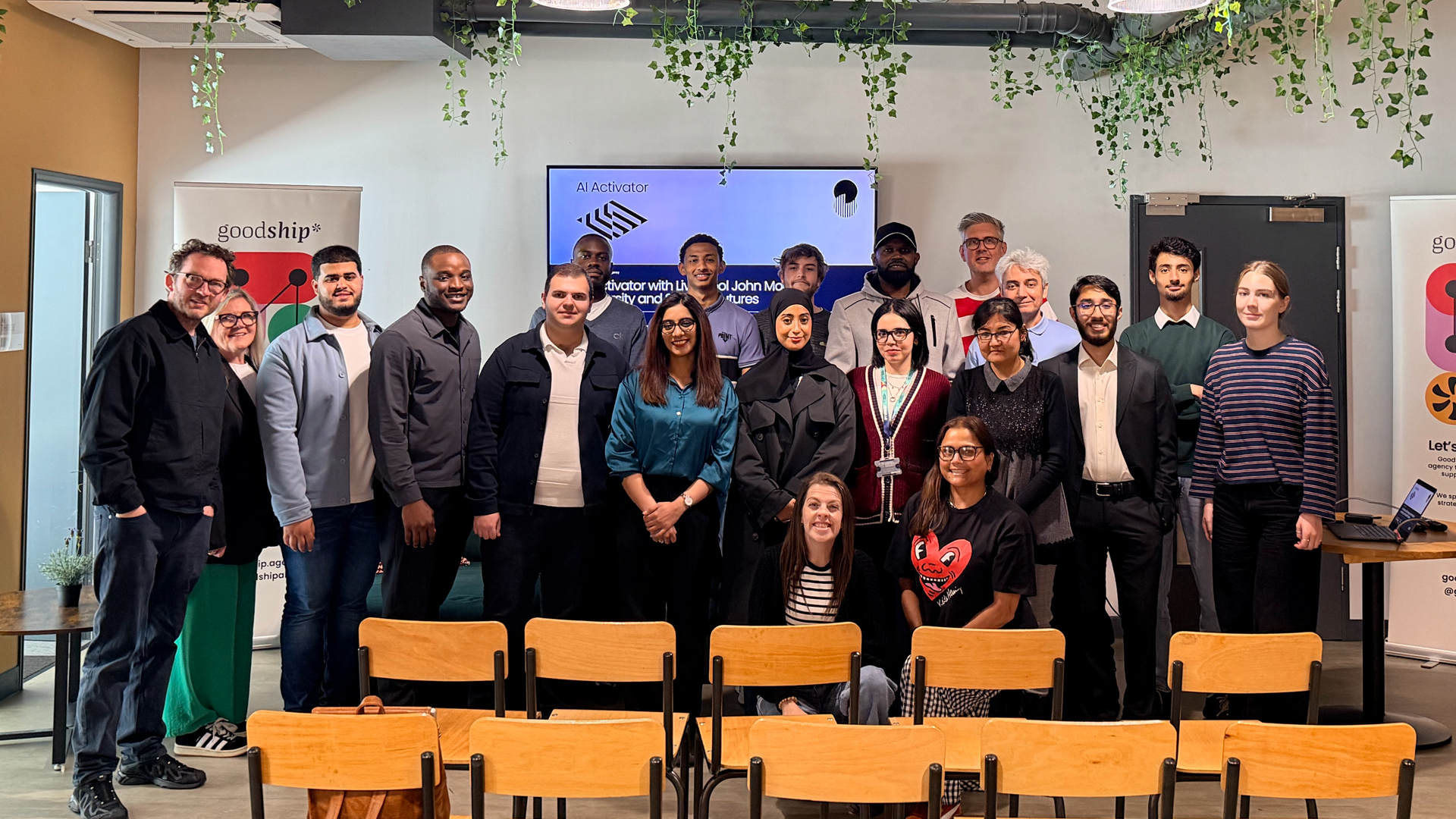
The LCEI team will work with businesses to understand the problem first, then develop a work plan with researchers, academics or students at Liverpool John Moores University and the University of Liverpool.
For businesses that have never worked with a university before, programmes like this can provide a much easier entry point.
You don't need to arrive with a fully formed research project.
You need a challenge worth exploring.
Could your business use it?
LCEI is supporting high-growth-potential businesses in the Liverpool City Region, subject to eligibility, with a focus on commercialisation, innovation and sustainability.
If you've been considering:
improving energy or resource efficiency,
understanding your carbon footprint,
developing a lower-carbon product or service,
testing a new technology or process,
working with university researchers,
or exploring how sustainability could create commercial opportunities,
it is worth having a conversation with the team.
The programme runs until March 2027.
Get in touch with LCEI: ecoinnovatory@ljmu.ac.uk
Sometimes the most useful innovation support starts with a simple question:
"We've got this challenge. Is there something we could do differently?"
This looks like a good place to ask it.
Related GoodShip* Activation
KinShip
A community for people building useful things together.
Explore KinShipRelated GoodShip* Activation
Navigate
Liverpool Chamber of Commerce × GoodShip*, connecting the business ecosystem.
Explore NavigateRelated GoodShip* service
Consultancy
Explore ConsultancyRelated GoodShip* service
Empowerment
Explore Empowerment
Gavin Sherratt
Founder · GoodShip*
Team member
Gavin founded GoodShip* to bring good people, good ideas and useful technology together around work that can make a genuine difference.
LinkedIn