People Power: Looking after people in Liverpool’s creative and tech industries
An old clipping helped me put words to why I left a job I cared about. Years later, it still shapes how we bring people together through KinShip and help Liverpool business owners and managers through Navigate.
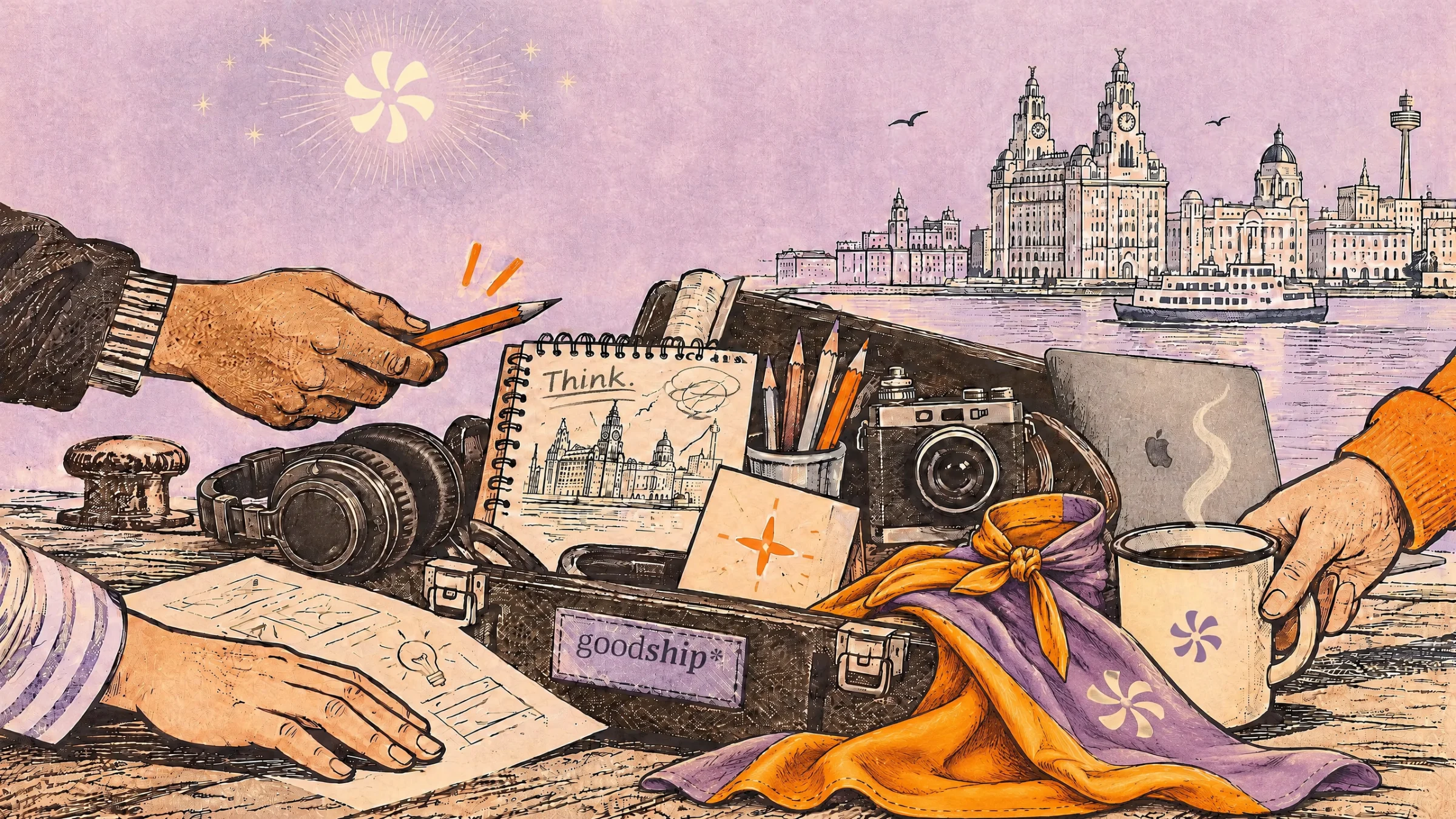
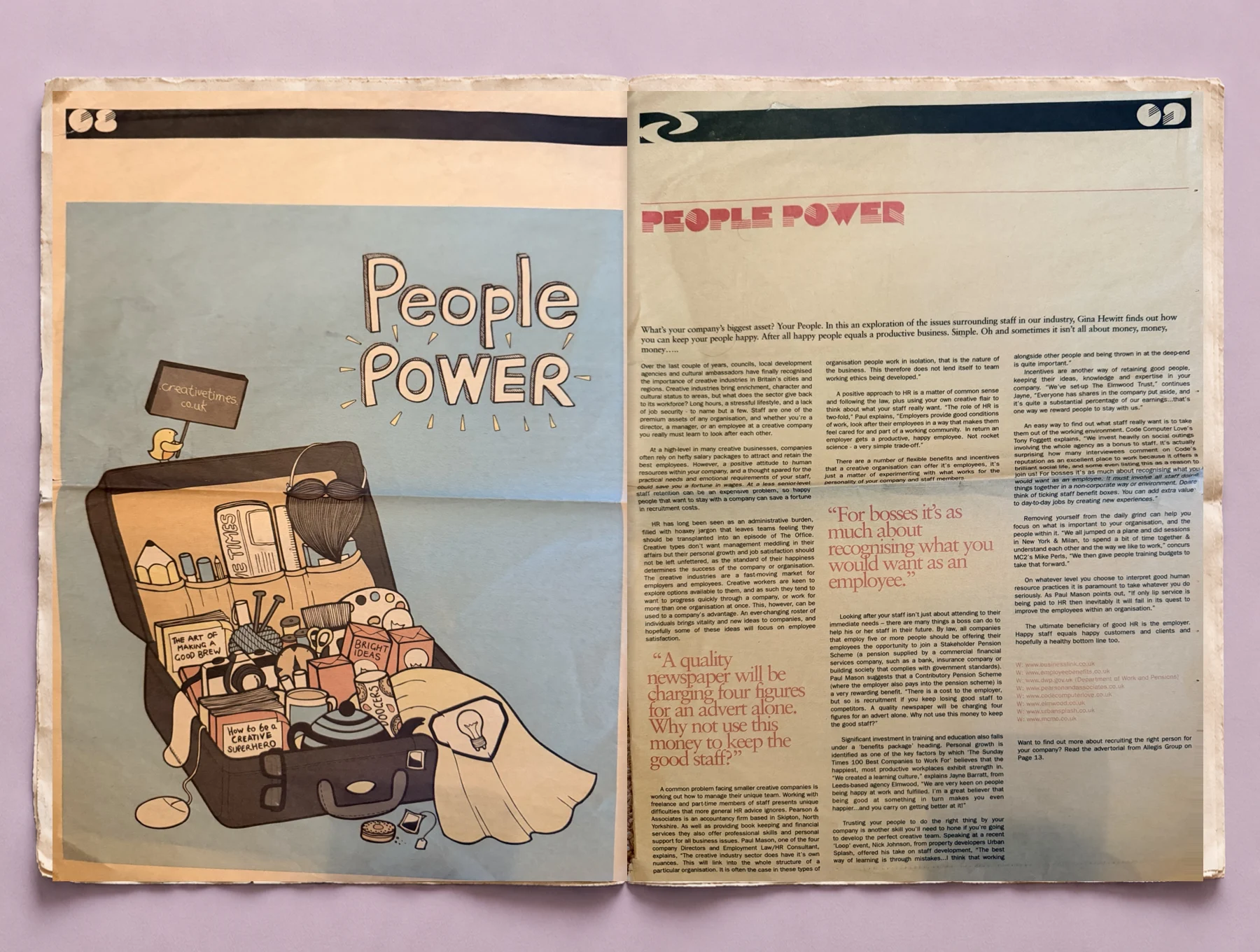
I’ve still got this folded copy of Creative Times. On one page there’s a suitcase full of pencils, bright ideas and a book about making a good brew, with a superhero cape spilling out. On the other is Gina Hewitt’s article, ‘People Power’. I remember reading it around the time I quit my job at Rippleffect. I cared about the work and put a lot into it. Over time, I felt that what I was putting in wasn’t being recognised. That was a big part of why I left.
Gina was writing about something bigger than my experience. Britain’s cities were recognising what creative businesses brought to their places. She asked what the sector gave back to the people doing the work. She wrote about long hours, job insecurity and the cost of losing good people. One example still makes me smile. A good newspaper recruitment advert could cost four figures. What could you do with that money for the person you already had?
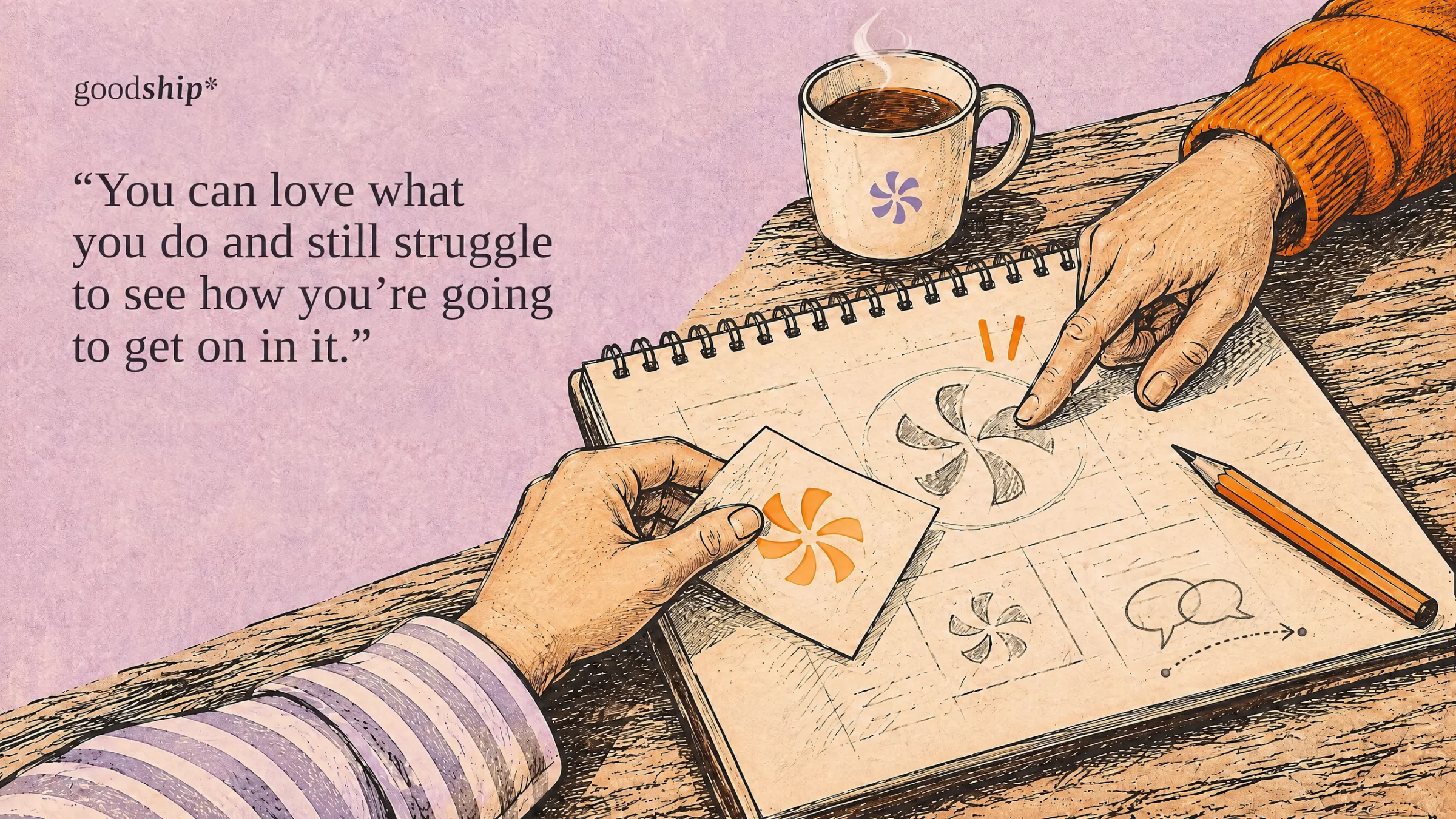
I’ve since co-founded Mashbo and started GoodShip*, so I’ve sat on both sides of that conversation. When you run a small business, you know exactly how quickly a deadline or a cash-flow problem can take over the week. I’ve had to learn that looking after people happens in those weeks too. It’s in the time you make to explain a decision, the credit you give when a project goes well and the conversation you have about what someone wants to do next. You can love what you do and still struggle to see how you’re going to get on in it.
Who can you turn to for support in Liverpool?
Reading the article now makes me think about Liverpool. A lot of what I’ve learned here has come from other people being generous with what they know. An introduction can get you talking to someone who’s had the same problem. A conversation over a brew can help you work out what you’re actually trying to do. That’s part of why we created KinShip, the GoodShip* community for sharing knowledge and making connections across sectors. A student, a founder and someone running a community organisation can bring very different experience to the same conversation. I like seeing what happens when they get to compare notes. Explore KinShip
Navigate is our collaboration with Liverpool Chamber of Commerce for creative, digital and tech businesses across Liverpool City Region. Those businesses are working out how to grow, when to bring people in and where to find help. The Knowledge Sharing sessions get people who know the detail into the room with owners and managers who are making those decisions. You can ask the question you’ve been putting off and hear how somebody else handled it. Explore Navigate
How can small businesses grow and look after their people?
If the price you’ve quoted only works because the team keeps putting in extra hours, you need to see that in the numbers. Understanding the cost of the work gives you a better chance of pricing it properly and giving people the time to do it well.
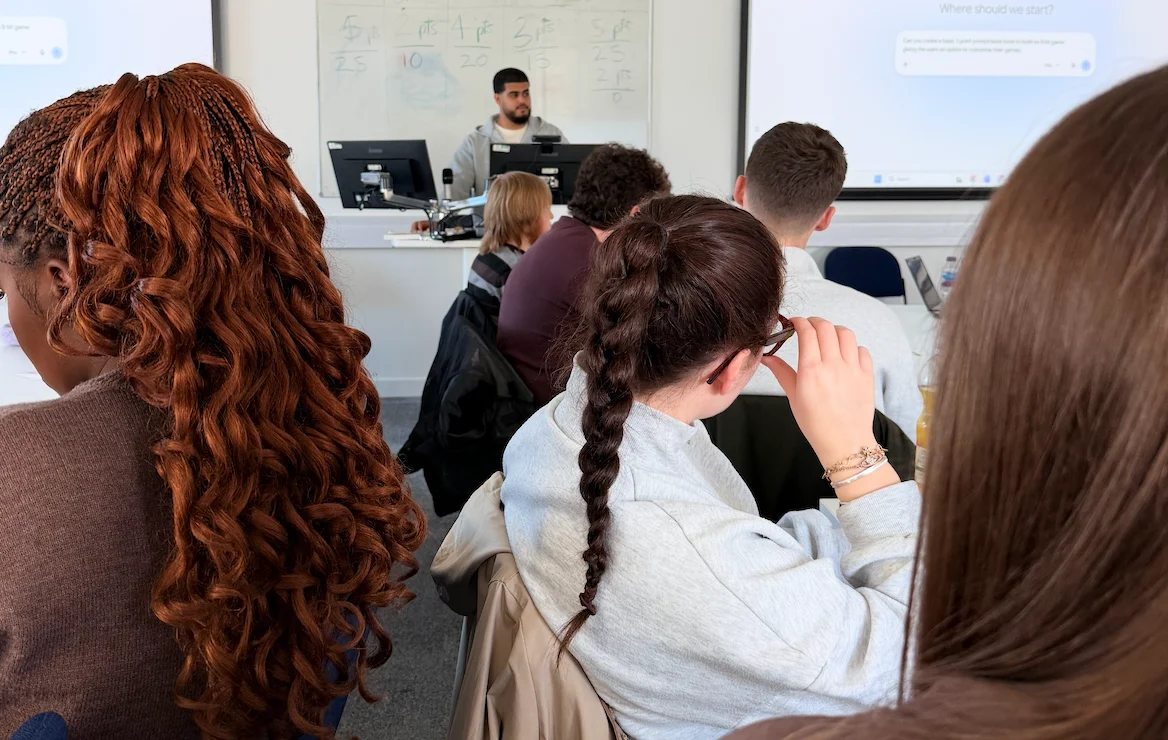
At Navigate’s Understanding Your Numbers session in the Old Hall at the Cotton Exchange, we talked about margins, overheads and what finance can help a business do. For me, it brought home how much the way you run the business affects the people doing the work. A decision about what to charge or when to take on a project is also a decision about how much you’re asking of the team. Understanding Your Numbers
At GoodShip*, I’m working with our accountants to get a clearer picture of the numbers and put better processes and systems in place. I want to know what’s coming in, what we’ve committed to and what we can afford to take on. It’s easier to work through those questions while you’ve got time to think. Once money gets tight, it can eat into the time and attention the people you work with need from you. I want to give us a better chance of spotting pressure early and keeping the commitments we’ve made.
Navigate’s Protect session on 9 December 2026 takes that idea further with contracts, HR and cybersecurity. I’m interested in the questions that come up before anything goes wrong. What should a freelancer know before they start? How do you have a difficult conversation early enough to give someone a fair chance to improve? Who can a small business turn to when it’s unsure how to handle staff or client data? Getting those foundations right helps the people doing the work know where they stand. Navigate Knowledge Sharing — Protect
Gina also wrote about giving people room to learn through mistakes. I think about that with the GoodShip* Activator. We give people a real brief, a team and some support to try something unfamiliar. AI can help them get to a first prototype sooner. What we do with that extra time matters. A junior colleague can ask why a decision was made, try a second idea or get someone to sit down and talk through the work with them. That’s where a lot of the learning happens. The GoodShip* Activator
I remember how it felt to leave a job I’d given a lot to. That’s stayed with me through running businesses and building communities in Liverpool. When someone’s done good work, I want them to hear what they did well while they’re still there to build on it. And when somebody’s ready for a chance they haven’t had before, I want us to be able to help them find it.
The original ‘People Power’ article by Gina Hewitt
Gina Hewitt, Creative Times - November 2007
What’s your company’s biggest asset? Your People. In this exploration of the issues surrounding staff in our industry, Gina Hewitt finds out how you can keep your people happy. After all happy people equals a productive business. Simple. Oh and sometimes it isn’t all about money, money, money…..
Over the last couple of years, councils, local development agencies and cultural ambassadors have finally recognised the importance of creative industries in Britain’s cities and regions. Creative industries bring enrichment, character and cultural status to areas, but what does the sector give back to its workforce? Long hours, a stressful lifestyle, and a lack of job security - to name but a few. Staff are one of the premium assets of any organisation, and whether you’re a director, a manager, or an employee at a creative company you really must learn to look after each other.
At a high-level in many creative businesses, companies often rely on hefty salary packages to attract and retain the best employees. However, a positive attitude to human resources within your company, and a thought spared for the practical needs and emotional requirements of your staff, could save you a fortune in wages. At a less senior-level, staff retention can be an expensive problem, so happy people that want to stay with a company can save a fortune in recruitment costs.
HR has long been seen as an administrative burden, filled with hoaxey jargon that leaves teams feeling they should be transplanted into an episode of The Office. Creative types don’t want management meddling in their affairs but their personal growth and job satisfaction should not be left unfettered, as the standard of their happiness determines the success of the company or organisation. The creative industries are a fast-moving market for employers and employees. Creative workers are keen to explore options available to them, and as such they tend to want to progress quickly through a company, or work for more than one organisation at once. This, however, can be used to a company’s advantage. An ever-changing roster of individuals brings vitality and new ideas to companies, and hopefully some of these ideas will focus on employee satisfaction.
A common problem facing smaller creative companies is working out how to manage their unique team. Working with freelance and part-time members of staff presents unique difficulties that more general HR advice ignores. Pearson & Associates is an accountancy firm based in Skipton, North Yorkshire. As well as providing book keeping and financial services they also offer professional skills and personal support for all business issues. Paul Mason, one of the four company Directors and Employment Law/HR Consultant, explains, “The creative industry sector does have it’s own nuances. This will link into the whole structure of a particular organisation. It is often the case in these types of organisation people work in isolation, that is the nature of the business. This therefore does not lend itself to team working ethics being developed.”
A positive approach to HR is a matter of common sense and following the law, plus using your own creative flair to think about what your staff really want. “The role of HR is two-fold,” Paul explains, “Employers provide good conditions of work, look after their employees in a way that makes them feel cared for and part of a working community. In return an employer gets a productive, happy employee. Not rocket science - a very simple trade-off.”
There are a number of flexible benefits and incentives that a creative organisation can offer it’s employees, it’s just a matter of experimenting with what works for the personality of your company and staff members.
Looking after your staff isn’t just about attending to their immediate needs – there are many things a boss can do to help his or her staff in their future. By law, all companies that employ five or more people should be offering their employees the opportunity to join a Stakeholder Pension Scheme (a pension supplied by a commercial financial services company, such as a bank, insurance company or building society that complies with government standards). Paul Mason suggests that a Contributory Pension Scheme (where the employer also pays into the pension scheme) is a very rewarding benefit. “There is a cost to the employer, but so is recruitment if you keep losing good staff to competitors. A quality newspaper will be charging four figures for an advert alone. Why not use this money to keep the good staff?”
Significant investment in training and education also falls under a ‘benefits package’ heading. Personal growth is identified as one of the key factors by which ‘The Sunday Times 100 Best Companies to Work For’ believes that the happiest, most productive workplaces exhibit strength in. “We created a learning culture,” explains Jayne Barratt, from Leeds-based agency Elmwood, “We are very keen on people being happy at work and fulfilled. I’m a great believer that being good at something in turn makes you even happier...and you carry on getting better at it!”
Trusting your people to do the right thing by your company is another skill you’ll need to hone if you’re going to develop the perfect creative team. Speaking at a recent ‘Loop’ event, Nick Johnson, from property developers Urban Splash, offered his take on staff development, “The best way of learning is through mistakes...I think that working alongside other people and being thrown in at the deep-end is quite important.”
Incentives are another way of retaining good people, keeping their ideas, knowledge and expertise in your company. “We’ve set-up The Elmwood Trust,” continues Jayne, “Everyone has shares in the company put aside, and it’s quite a substantial percentage of our earnings...that’s one way we reward people to stay with us.”
An easy way to find out what staff really want is to take them out of the working environment. Code Computer Love’s Tony Foggett explains, “We invest heavily on social outings involving the whole agency as a bonus to staff. It’s actually surprising how many interviewees comment on Code’s reputation as an excellent place to work because it offers a brilliant social life, and some even listing this as a reason to join us! For bosses it’s as much about recognising what you would want as an employee. It must involve all staff doing things together in a non-corporate way or environment. [Doare] think of ticking staff benefit boxes. You can add extra value to day-to-day jobs by creating new experiences.”
Removing yourself from the daily grind can help you focus on what is important to your organisation, and the people within it. “We all jumped on a plane and did sessions in New York & Milan, to spend a bit of time together & understand each other and the way we like to work,” concurs MC2’s Mike Perls, “We then gave people training budgets to take that forward.”
On whatever level you choose to interpret good human resource practices it is paramount to take whatever you do seriously. As Paul Mason points out, “If only lip service is being paid to HR then inevitably it will fail in its quest to improve the employees within an organisation.”
The ultimate beneficiary of good HR is the employer. Happy staff equals happy customers and clients and hopefully a healthy bottom line too.
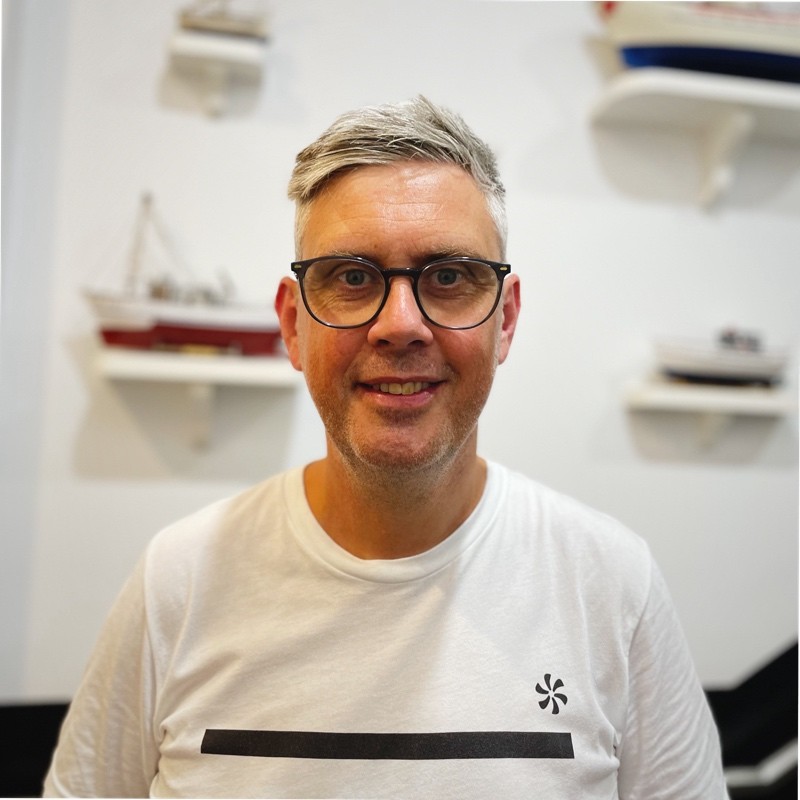
Gavin Sherratt
Founder · GoodShip*
Team member
Gavin founded GoodShip* to bring good people, good ideas and useful technology together around work that can make a genuine difference.
LinkedIn