It's All About Chemistry: Why the Right Partnerships Matter
Great business partnerships aren't built on always agreeing. They're built on shared values, different perspectives, bravery and the chemistry to create something meaningful together.
Following on from my recent article, Sometimes, the bravest thing you can say in business is NO, I've been thinking about the other side of that conversation.
What makes us say yes?
And increasingly, I think the answer comes down to one thing.
Chemistry.
When you're building a business like GoodShip*, chemistry matters. Not just between the people working within the business, but with the clients, collaborators, partners and communities we choose to work alongside.
It's about understanding each other, sharing values and finding the common ground between what we're trying to achieve and, more importantly, why we're doing it.
But it's also about understanding ourselves. Our own values, our focus and the mission we're building.
Because chemistry has to work both ways.
And that doesn't mean everything is always plain sailing.
When you're surrounded by creative people, different thinkers and people who genuinely care about what they're doing, there are going to be disagreements. Ideas get challenged, ownership can become complicated and sometimes somebody will tell you that the idea you're convinced is brilliant really isn't.
But that's part of having good chemistry.
Chemistry isn't about always agreeing. It's about having enough trust and respect to disagree, challenge each other and still move forward together.
In fact, I'd be more worried if everybody around me just agreed with everything I said.
Sometimes chemistry is personal
When I look at the mix of projects we've been involved in through GoodShip*, there's something interesting about just how different they are.
Healthcare, education, football, technology, business growth, community and the third sector.
On paper, some of these organisations couldn't be further apart.
But there's a common thread in the relationships we're building. And sometimes that chemistry comes from somewhere much more personal.
Our work with Clatterbridge Cancer Charity is one of those examples.
I lost my mum and one of my best friends, Mike, to different cancers within months of each other. It's something that has stayed with me and has shaped how I think about the things that really matter.
So when the opportunity came to work with Clatterbridge, there was already a personal connection to their mission.
I understood, from my own experiences, something of the impact cancer has, not just on the person living with it, but on everybody around them.
Our challenge was to explore how technology could help more patients access the benefits of therapeutic music.
Something that might bring a moment of comfort, connection or even a little bit of joy during an incredibly difficult time.
It wasn't about building technology for the sake of it.
It was about people.
Together, we developed the concept and technical foundations for Music Resonance, exploring how digital experiences might help patients access live and recorded music when they couldn't physically attend performances.
The result was an MVP concept and a clearer framework for future testing, not simply an idea left on a whiteboard.
And the relationship has since opened further conversations about immersive technology and what might be possible in cancer care.
For me, the chemistry went beyond the original brief.
It was personal.
I couldn't change what had happened to my mum or Mike, but perhaps some of the things we've learned, the technology we understand and the people we bring together might make somebody else's experience a little better.
And sometimes that's more than enough of a reason to want to do something.
Then there's Port Vale Football Club.
A completely different world, but another opportunity with a personal connection.
Port Vale was my Grandad's team.
I probably annoyed him quite a bit by becoming a Potter and supporting Stoke City instead.
Clearly, I wanted a different level of football pain in my life!
But despite our footballing differences, I've always had a connection with Vale. I still love a trip to Vale Park, partly because it's somewhere I can remember my Grandad.
So when the opportunity came to work with Port Vale during their promotion celebrations, there was already something there for me.
But this wasn't simply about football.
It was about community, belonging and storytelling.
Football clubs are part of people's identities, their families, their friendships and the places they call home. They're communities built across generations.
Through our Fableit technology, we worked with Port Vale to capture their promotion celebrations through the eyes of the supporters themselves.
Not just professionally produced content, but the emotions, celebrations and memories of people who were actually there.
The supporters became the storytellers.
It gave the club a different way to connect with its community, while giving us a live opportunity to test Fableit, understand how people used it and improve the product.
And for me, there was that extra family connection.
I doubt my Grandad would have expected me to end up working with Port Vale.
He'd probably still have questioned my decision to support Stoke!
But I think he'd have enjoyed the connection.
Two completely different projects. Two very different challenges.
But both had a chemistry that went beyond the commercial brief.
Sometimes the why comes from the values you share. Sometimes it comes from the experiences you've lived. And sometimes it's a mixture of both.
Where our missions cross over
Not every relationship has that kind of personal history, of course.
And it doesn't need to.
Sometimes the chemistry comes from recognising that two organisations, with different ambitions and expertise, share a belief in what could be possible.
I often think about this as a Venn diagram.
There are things our clients want to achieve. There are things GoodShip* believes in and wants to build. And somewhere in the middle, there's an opportunity where those ambitions overlap.
That's often where the interesting work happens.
Our relationship with EdenFiftyOne is a good example.
At its heart, EdenFiftyOne is about improving literacy and learning. But when you look beyond the educational technology, there's a bigger conversation about opportunity and social mobility.
Because education isn't simply about passing exams.
It's about giving people the knowledge, skills and opportunities to make choices about their futures.
Our work together has involved product thinking, technology strategy, commercial development, investor storytelling and helping the business prepare for growth.
We've supported that journey alongside EdenFiftyOne's team, including the period in which they secured £260,000 in strategic investment.
But the chemistry isn't simply about helping an education technology company grow.
It's about what better education can make possible.
And that connects directly with something we're building through AI Activator.
Our ambition with AI Activator isn't just to teach people how to use artificial intelligence.
It's about helping people discover what they're capable of. Giving them the opportunity to work on real challenges, question ideas, use technology, collaborate and develop the bravery to try something new.
Particularly those who haven't always had the same access to networks, experience and opportunities.
That's where the Venn diagrams start to overlap.
EdenFiftyOne is looking at how literacy and learning can open doors. AI Activator is looking at how creativity, technology, practical experience and human skills can help people walk through them.
Different approaches, but a shared belief that education should create opportunity.
Then there's Ark Immersive.
Another relationship where I can see connections between their capabilities and some of the things I personally believe need to change.
I've spoken before about my own experiences of education.
I struggled at school. Traditional approaches to learning didn't always work for me, and I left with a very different relationship with education from the one I have today.
That's probably why I'm so interested in finding different ways for people to learn.
Because not everybody learns in the same way.
Some people need to see something. Others need to experience it, experiment with it, take it apart or learn through making mistakes.
And immersive technology creates some interesting possibilities.
With Ark, our relationship has involved strategic direction, market positioning, storytelling, website development and challenging where their technology could make a genuine difference.
We've even connected Ark's own business challenges with AI Activator, bringing students into the process to research, explore ideas and prototype new approaches.
So the business gains fresh thinking and the students gain real experience.
And there's another interesting connection.
Our work with Clatterbridge has opened exploratory conversations involving Ark around how immersive experiences might support people affected by cancer-related cognitive challenges.
It's an early-stage opportunity that still needs research, funding and validation.
But it's a perfect example of why bringing people together matters.
A relationship in healthcare, a relationship in immersive technology and a shared interest in improving human experiences can open the door to something none of us might have pursued independently.
The right chemistry doesn't just help you deliver a project. Sometimes it creates opportunities that didn't exist when the relationship began.
Why we keep bringing people together
This is also why community is such an important part of GoodShip*.
It's why we host events, bring people into rooms, make introductions and signpost opportunities that might have absolutely no commercial benefit to us.
Because somewhere in those conversations, connections and introductions, we find people who give a ship*.
People who care about making a difference. People who are prepared to share what they know. People who see an opportunity to help somebody else and don't immediately ask what's in it for them.
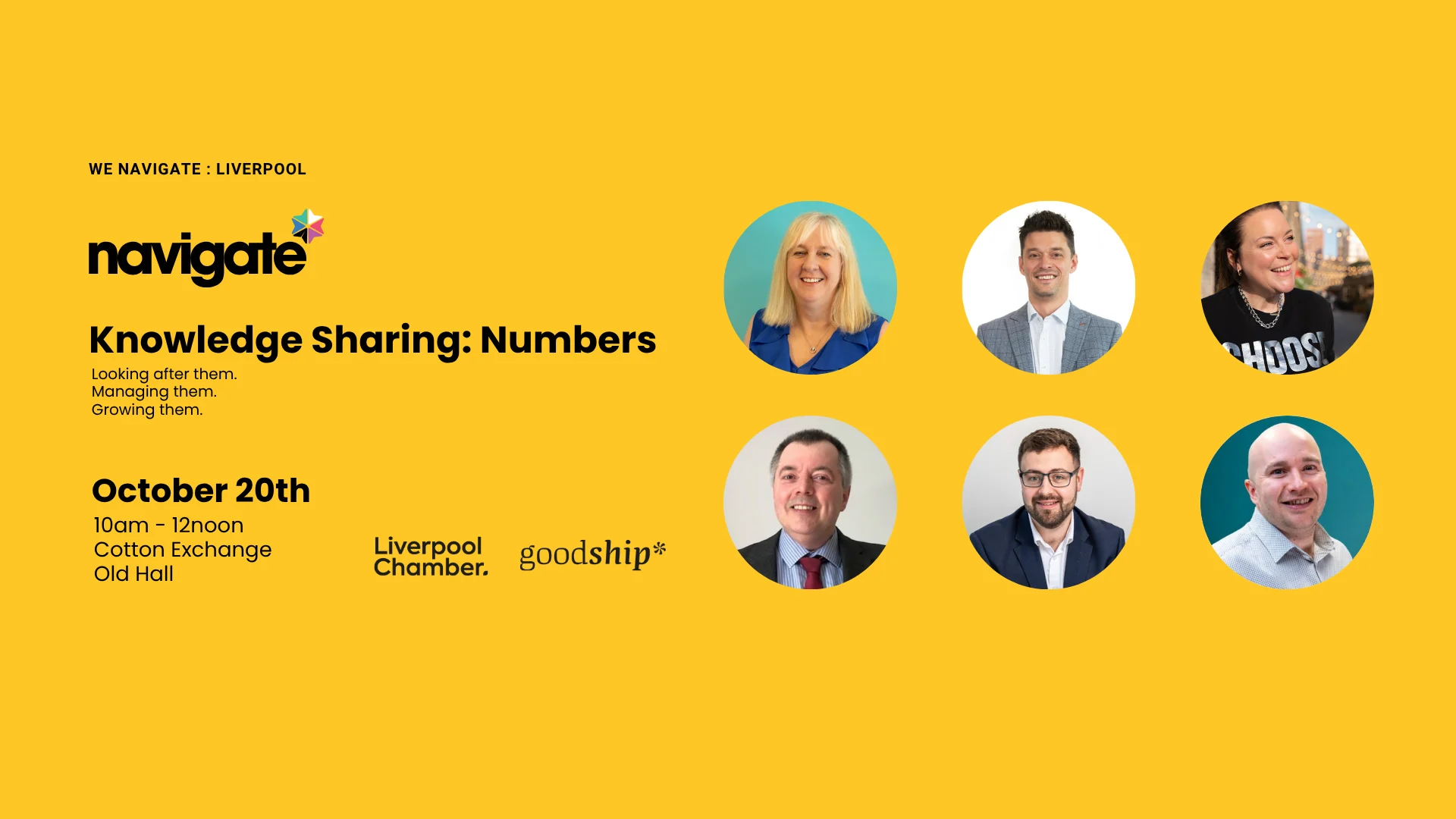
Through our work with Liverpool Chamber of Commerce and Navigate, we're bringing established businesses together with creative people, technology companies, start-ups and organisations that can support growth.
Through AI & Tech for Good, we're creating conversations between people who understand technology and people who understand the problems we might use it to solve.
And sometimes the most important thing we do is simply introduce two people who should probably have met years ago.
I don't think you can manufacture chemistry.
But you can create the conditions where it has a better chance of happening.
And when it does, it can lead to new ideas, stronger businesses, unexpected partnerships and opportunities for people who might otherwise have been overlooked.
That's not separate from our business model.
It's part of how we do business.
We don't have all the answers. Or all the crew.
One thing I've never wanted GoodShip* to become is a business that claims it can do everything.
We have brilliant people around us, with different skills, experiences and ways of thinking. But that doesn't mean we've got every skill covered or that the crew we have today is necessarily the crew we'll need tomorrow.
And that's exciting.
Every project can take us to a different port of call. Every challenge might need a different combination of people, knowledge and experience.
Sometimes we bring somebody new into the crew. Sometimes we collaborate with another business. Sometimes we introduce a client to somebody far better placed to help them than we are.
I see that as a strength rather than a weakness.
It's something we've experienced through our university partnerships and AI Activator programmes.
One of the most rewarding examples has been seeing Abu progress from taking part in an early AI Activator experience to becoming a permanent member of the GoodShip* team.
That's what creating opportunity can look like.
Somebody joins a programme, discovers something about themselves, builds relationships and becomes part of a journey that neither of us necessarily planned.
And that brings me to something that Leon McCowan has really helped shape in our thinking.
We often talk about confidence, but perhaps we should be talking more about bravery.
Confidence often comes after you've done something.
Bravery is what gets you to take that first step.
It's being prepared to challenge the status quo, question why things have always been done a certain way and try something different.
We want people around us who are prepared to do that.
Not necessarily the loudest people in the room or those who claim to have all the answers.
Sometimes the bravest person is the one who quietly puts their hand up and says, "What if we tried this?"
And sometimes that one question is enough to take everybody somewhere new.
What makes good chemistry in business?
The more I think about it, the more I realise we should be asking ourselves some simple questions when exploring new relationships.
Purpose. Do we understand why we're doing this and who should benefit? Is there something worth making better beyond simply completing a project?
People. Can we work together honestly, challenge each other's thinking and respect the expertise we each bring?
Opportunity. Could our combined skills, experiences and connections create something that neither of us could achieve as effectively alone?
Alignment. Does this relationship support both organisations' values, ambitions and the direction they're trying to take?
These aren't questions that need complicated scoring systems or hours of workshops.
Sometimes you can sense the answers in the first conversation.
Other times you have to work together to discover them.
And occasionally the answers tell you something you might not want to hear.
That the chemistry isn't quite right.
Which brings me back to where this story started.
Chemistry also means staying true to ourselves
One thing I'm learning as GoodShip* grows is that chemistry isn't just about understanding the people we work with.
It's also about respecting our own focus, values and mission.
Because it's very easy when you're running a business to become so focused on what other people need that you start losing sight of what you set out to do.
You chase opportunities because there's a budget attached. You take on projects because you have the skills to deliver them. You say yes because somebody has asked and you don't want to disappoint them.
And before you know it, other people's priorities are shaping your business.
We've got our own mission at GoodShip*.
We want to build a commercially successful business. We have people to pay, responsibilities to meet and ambitions for where we want to take things.
But we also want to champion creativity, technology, education, opportunity and community.
And we have to protect that focus.
That doesn't mean being inflexible or unwilling to explore something outside our comfort zone.
Quite the opposite.
Some of our most interesting opportunities have taken us into sectors and challenges we might never have considered.
But there's a difference between exploring something new that connects with our purpose and being pulled into something that takes us away from it.
We don't have to share the same mission to share the same values. And we don't have to agree on everything to create something brilliant together.
But we should understand and respect what matters to each other.
And we have to recognise when an opportunity might be better suited to somebody else.
Sometimes saying no creates the space for another business to say yes.
And sometimes saying no to the wrong chemistry protects the time and energy we need for the right relationships.
Because good chemistry shouldn't come at the expense of our own direction.
It should help both organisations move forward.
The next port of call
When I look at everything we're involved in, from cancer care and football to education, social mobility, business growth, technology and community, it reminds me that we've never needed to fit neatly into one sector.
And I don't particularly want us to.
Some opportunities connect with our professional experience. Others connect with our personal experiences, the people we've lost, the memories we carry or the communities that have shaped us.
And others introduce us to something we didn't even know we cared about.
Our crew will continue to change. The people we collaborate with will continue to grow. And the challenges we take on will hopefully become bigger, more ambitious and occasionally a little bit scarier.
The chemistry won't always be perfect.
There will be frustrations, disagreements, wrong turns and uncomfortable conversations along the way.
But I'd take that over a room full of people who simply nod and agree.
My last article was about being brave enough to say no.
Perhaps this one is about understanding ourselves well enough to recognise the right people, purpose and chemistry to say yes to.
Because the right chemistry doesn't just make a project easier to deliver. It can take you somewhere you never expected to go. But it should never take you away from who you are.
We're not trying to find more people who are just like us.
We're trying to find people whose ideas, values, bravery and ambitions can connect with ours.
We're trying to find more people who give a ship*.
And we're making sure that, as we grow, we keep giving a ship* about the things that matter to us too.
That's why we do GoodShip*.
And who knows where the next port of call might take us?
Got something you're trying to change?
Whether you're building a business, exploring an idea, creating opportunities for people or challenging how things have always been done, we're always interested in meeting people who give a ship*.
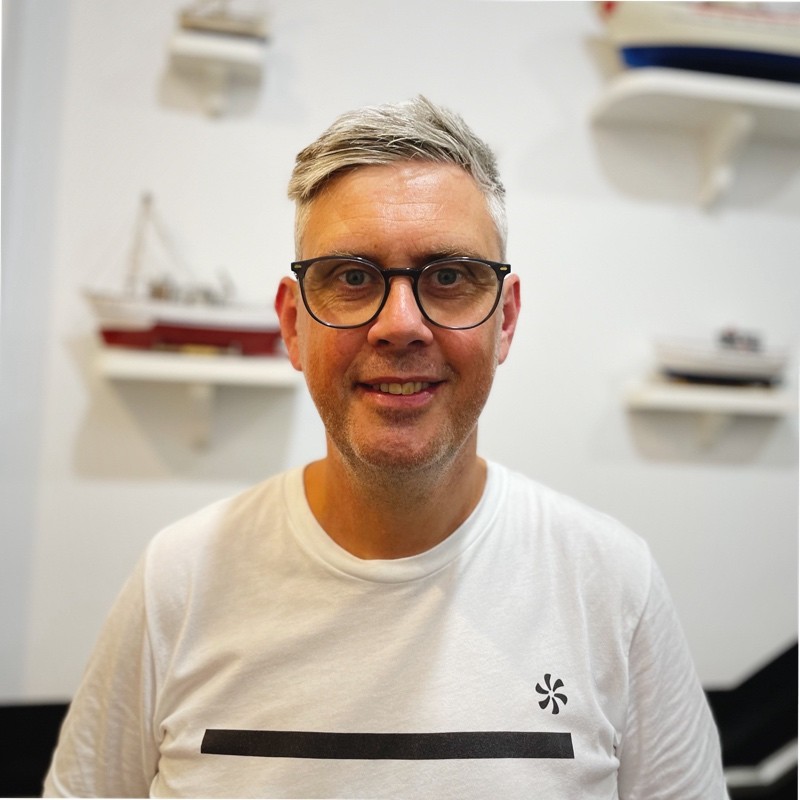
Gavin Sherratt
Founder · GoodShip*
Team member
Gavin founded GoodShip* to bring good people, good ideas and useful technology together around work that can make a genuine difference.
LinkedIn