The creative industries do not just have a skills gap. We have an access, confidence and opportunity gap.
The creative industries do not just face a skills gap. Confidence, access, employer capacity and real-world experience all shape who gets in, who progresses and how businesses grow.
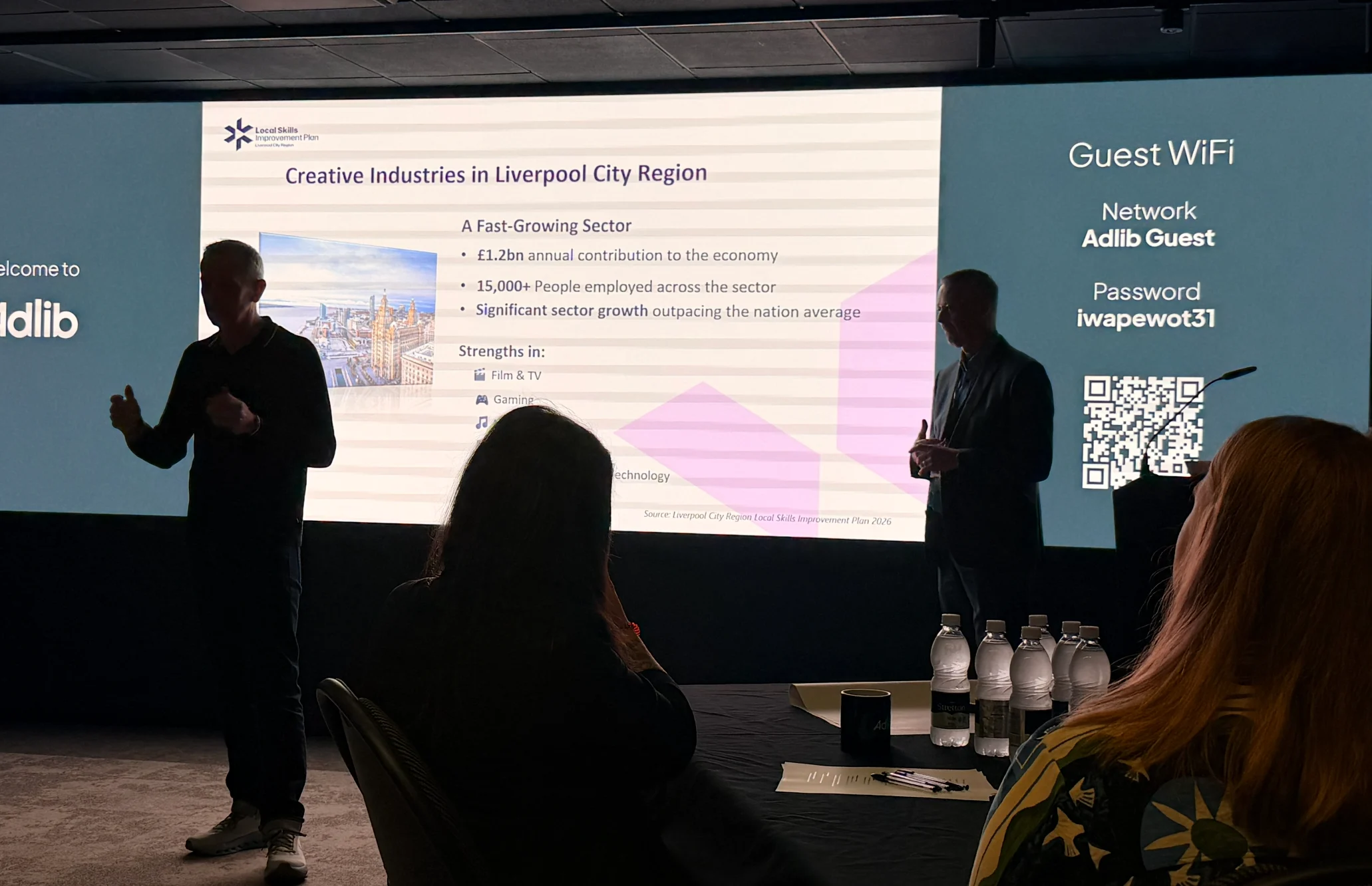
Our latest Liverpool City Region Local Skills Improvement Plan conversation around the creative industries started with skills.
It quickly became about much more than that.
AI. Digital capability. Leadership. Freelancers. Apprenticeships. Work experience. Neurodiversity. Class. Confidence. Education. Employer capacity.
All of these things are connected.
Because if we want Liverpool City Region’s creative industries to grow, we need the people who can help those businesses grow with them.
And that means thinking beyond a traditional list of technical skills.
At GoodShip*, we spend a lot of time working across the spaces between creativity, technology, strategy, business, education and community.
Increasingly, that feels important.
The future workforce is unlikely to divide neatly into creatives, technologists, strategists and commercial people.
The people and businesses that thrive will increasingly be those able to move between those worlds.
So the skills conversation cannot simply be:
What jobs do we need to fill?
It also needs to ask:
What capabilities will people need to adapt?
How do we give people meaningful experience before they enter the workplace?
How do employers become part of education rather than simply waiting at the end of it?
And how do we make sure more people can access those opportunities?
Those were some of the bigger questions behind the conversation.
The skills we need are changing
The discussion started with five broad priorities emerging through the LSIP work:
digital and AI capability
fusion skills
freelancer business skills
leadership and management
talent pipeline and progression
These are all areas we recognise directly through our work at GoodShip*.
When we work with organisations, we rarely find that the challenge fits neatly into one discipline.
A website project can quickly become a conversation about brand, audience, data and business strategy.
An AI project becomes a conversation about people, workflow, confidence and organisational change.
A community programme becomes a conversation about communications, partnerships, events, digital platforms and impact measurement.
A creative brief can become a commercial challenge.
That is why our own work spans areas including strategy, creative, digital and technology, consultancy, activation, education and empowerment.
It is also why the idea of fusion skills feels particularly relevant.
The strongest people do not necessarily need to know everything.
But they increasingly need to understand how their work connects with everything around it.
Creative and technical.
Technical and commercial.
Strategy and delivery.
Ideas and execution.
Technology and people.
The creative industries need people who can join the dots
One employer described looking for people who can do their technical role well, but can also speak confidently with clients, work effectively within a team and understand workplace relationships.
That feels significant.
Someone can be an exceptional designer, developer, filmmaker, producer or technician but still struggle if they cannot respond to feedback, communicate an idea or understand the commercial context around the work.
Likewise, somebody can have excellent commercial instincts but struggle to create something useful if they cannot collaborate with specialists.
The future creative workforce needs both depth and breadth.
At GoodShip*, some of the capabilities we increasingly find ourselves developing with people are not necessarily the things traditionally listed in a job specification.
Questioning.
Presenting.
Problem-solving.
Research.
Storytelling.
Facilitation.
Working with uncertainty.
Making decisions with incomplete information.
Collaborating with people who think differently.
Using technology to move an idea forward.
These capabilities sit alongside technical skills rather than replacing them.
And they are becoming more important as technology changes faster.
We need to rethink what we mean by “work ready”
One of the most important parts of the conversation was around younger people entering work.
There is an easy narrative that younger generations are disengaged, entitled, lazy or unwilling to work.
I do not think that gets us anywhere.
Sometimes what looks like disengagement is uncertainty.
Sometimes it is fear of getting something wrong.
Sometimes it is a lack of confidence.
Sometimes there are simply too many options.
I talked about my 17-year-old stepdaughter.
She is looking at university, apprenticeships, employment, travel and combinations of all of them.
That is not a lack of ambition.
It is almost the opposite.
The number of choices available can itself become overwhelming.
So perhaps we need to rethink the phrase work ready.
Yes, young people need to understand expectations, communication, responsibility and professionalism.
But employers also have a responsibility to become better at bringing people into work.
Are we explaining enough?
Are we creating environments where people can ask questions?
Are we providing meaningful early experiences?
Are we helping people understand why the work matters?
Are we giving young people permission to learn rather than expecting them to arrive fully formed?
Work readiness has to work in both directions.
AI is a skills challenge, but confidence may be the bigger challenge
AI obviously featured heavily.
But the most interesting conversation was not really about prompting or specific tools.
It was about confidence.
Students are being told that AI is going to transform the workplace they are entering while, at the same time, many encounter AI primarily through conversations around plagiarism, cheating and misconduct.
That creates a contradiction.
We heard examples of educators taking a much more constructive approach.
Instead of asking AI to produce an answer, learners might use it to critique something they have created, identify errors, explore another perspective or help them understand a concept.
That moves AI from answer machine to thinking partner.
Within the creative industries there is an additional challenge.
If somebody uses AI to create an image, video, piece of writing, campaign or prototype, where does their individual contribution sit?
The future skill is not simply producing something with AI.
It is understanding:
What did you contribute?
Why did you make those choices?
What did you reject?
What did you change?
Can you explain your thinking?
Can you recognise when the AI is wrong?
Can you take responsibility for the finished work?
Those are much more interesting questions.
AI Activator has taught us that the technology is only the starting point
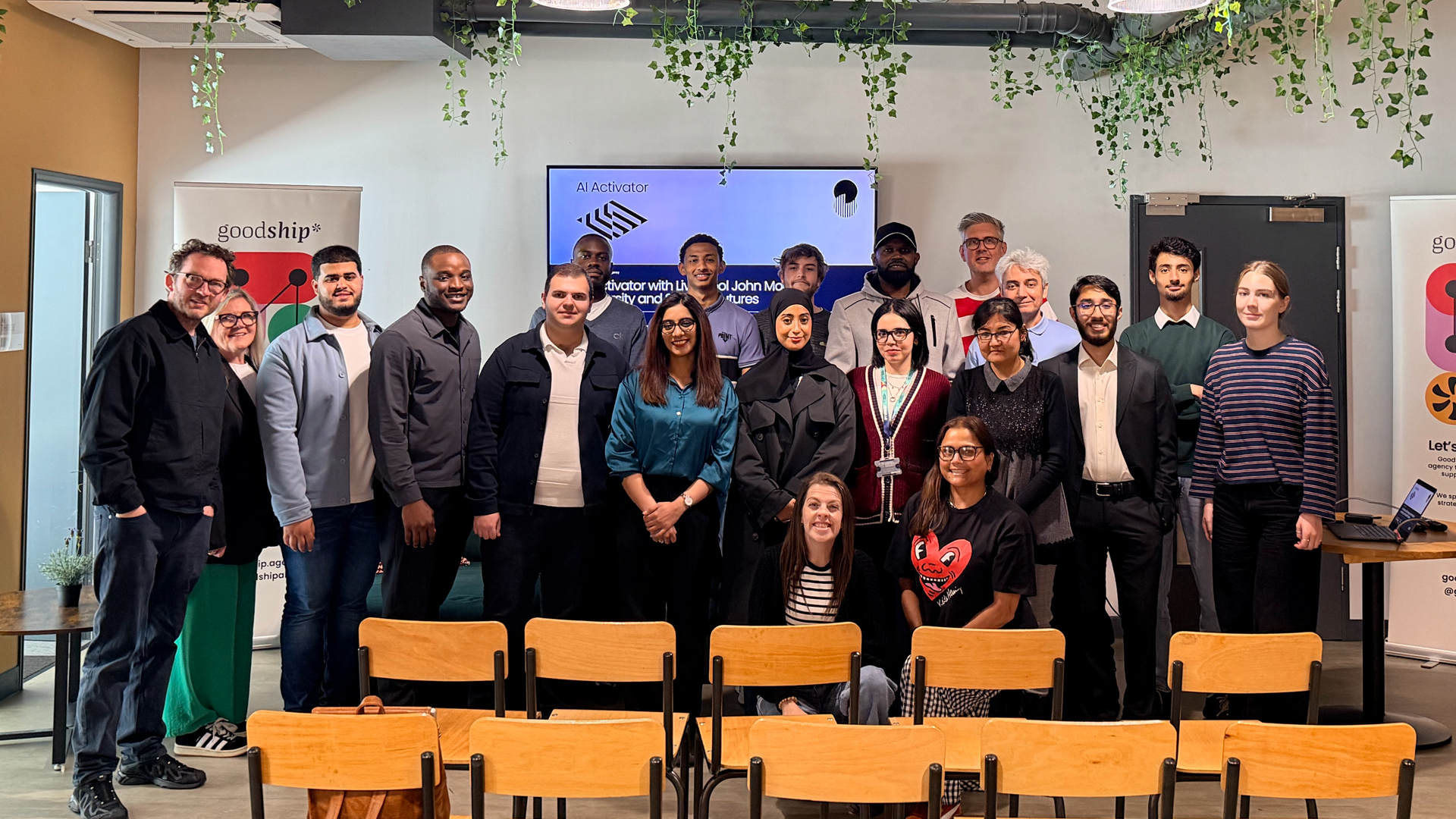
This is something we have seen directly through AI Activator, the programme we developed at GoodShip*.
On the surface, it is an AI programme.
But that description increasingly feels too narrow.
Participants work in teams on live briefs provided by real organisations.
They research the problem.
Talk to the client.
Explore ideas.
Use AI and other digital tools.
Develop strategies.
Build prototypes.
Create presentations.
And ultimately stand in front of people and explain what they have done.
In a matter of days, somebody can move from having relatively little confidence with AI to presenting an idea, product or solution back to an organisation.
The technology accelerates what is possible.
But the development happening around it is much broader.
We see people build confidence.
We see people discover they are capable of doing something they did not believe they could do.
We see people learn to present.
We see people challenge one another.
We see people make mistakes and recover from them.
We see people understand clients.
We see people become more comfortable with ambiguity.
And we see participants who did not previously consider themselves technical building functioning digital products.
Across our early programmes, 87% of participants reported increased confidence and 80% said the experience had changed their perspective on their career.
Those outcomes matter because they show that skills development does not have to begin with teaching more content.
Sometimes it begins by giving people the right environment, tools, challenge and permission to try.
Real briefs change the relationship between education and industry
One of the things we deliberately built into AI Activator was the use of genuine organisational challenges.
That matters.
There is a difference between:
“Imagine you are working with a business…”
and
“Here is the founder. Here is their challenge. They will be back on Friday to see what you have created.”
Suddenly the work has consequence.
Participants need to listen.
Ask better questions.
Understand the organisation.
Make decisions.
Manage time.
Present professionally.
And respond when the original idea does not work.
This is not unique to AI Activator.
It is simply one model for how we can bring education and employers closer together.
There is an opportunity to use more:
Live briefs.
Industry challenges.
Short placements.
Employer-led projects.
Hack days.
Workplace visits.
Mentoring.
Creative commissions.
Problem-solving sessions.
Micro-internships.
These experiences can give learners exposure to the realities of work without requiring every business to immediately create a traditional placement or apprenticeship.
Neurodiversity should be part of the capability conversation
Another recurring theme was neurodiversity.
ADHD.
Autism.
Asperger’s.
Dyslexia.
Different ways of learning, processing information and solving problems.
Too often, conversations about neurodiversity begin with support requirements.
Those conversations matter.
But there is another side.
What capability can a different way of thinking create?
Creative and technology businesses often exist because somebody looked at a problem differently from everybody else.
At GoodShip*, asking questions, challenging assumptions and approaching problems from different perspectives is a fundamental part of how we work.
Sometimes the most valuable person in a room is not the person who knows the most about the subject.
It is the person who asks the question everyone else overlooked.
The creative industries should be particularly good at recognising that.
If we genuinely want diversity of thought, our recruitment, education and development systems need to be capable of recognising different thinkers.
That means looking beyond qualifications alone.
We need to recognise potential as well as credentials
That came through strongly in the employer conversation.
Colin talked about bringing people into MSP Global who may not have had the strongest formal qualifications but had something the business could develop.
Andy described a similar approach at Adlib.
For many specialist roles, there simply is not a conventional course that teaches exactly what the business requires.
So they look for things such as passion, initiative and willingness to learn.
Then they develop the specialist capability internally.
There is a lesson in that.
Qualifications matter.
But they are evidence of one kind of achievement.
They are not the only evidence of potential.
A portfolio can matter.
A project can matter.
An attitude can matter.
Curiosity can matter.
A recommendation can matter.
Something somebody built at home can matter.
A willingness to learn can matter.
As the nature of work changes, employers may need to become better at identifying these signals.
Opportunity is shaped by financial security
The conversation also moved into an area that skills strategies sometimes avoid.
Class.
Risk.
And who can afford to take it.
There is a significant difference between somebody who can graduate, live at home, freelance while developing a portfolio, accept a lower-paid opportunity or start a business with family support behind them and somebody who needs to earn immediately.
The same opportunity does not carry the same risk for everybody.
That affects entrepreneurship.
It affects university choices.
It affects apprenticeships.
It affects freelance careers.
It affects whether someone can move cities for an opportunity.
It affects whether someone can afford an unpaid placement.
So widening access cannot simply mean making more people aware that an opportunity exists.
We have to think about whether they can realistically afford to take it.
This matters particularly in the creative industries, where freelance and portfolio careers remain common.
Freelancers need business skills too
Being talented at your craft does not automatically make you good at running a business.
Yet a huge proportion of people working across the creative economy effectively have to do both.
Pricing.
Contracts.
Tax.
Insurance.
Intellectual property.
Negotiation.
Cashflow.
Sales.
Client relationships.
Research and development.
Planning.
Getting paid.
Knowing when to say no.
These are not secondary skills.
For a freelancer, they can determine whether a career is sustainable.
It is one of the reasons we increasingly think about commercial capability as part of creative capability at GoodShip*.
Through our consultancy, programmes, events and work with Liverpool Chamber, we are interested in creating more spaces where people can understand these practical elements of business.
Not because every creative needs to become an accountant or lawyer.
But because people need to understand the rules of the game they are participating in.
Leadership also needs to be learned
Another area identified through the LSIP work was leadership and management.
This is a common problem in creative businesses.
Somebody becomes very good at their discipline.
They get promoted.
Suddenly their job changes.
Instead of primarily designing, producing, coding or delivering, they are managing people.
Giving feedback.
Handling conflict.
Planning workloads.
Supporting development.
Communicating business decisions.
Managing clients.
Nobody necessarily taught them how to do that.
Technical excellence does not automatically create leadership capability.
That transition needs support too.
If the creative sector wants stronger businesses, developing managers may be every bit as important as developing entry-level talent.
Education and industry need to get much closer
One of the sharper parts of the conversation was about education.
There are excellent programmes and brilliant educators doing important work.
But there was also frustration about how slowly parts of the system can adapt.
Creative and technology industries can change dramatically within a couple of years.
Qualifications and curricula often cannot.
Somebody can begin a three-year course in a rapidly changing discipline and graduate into an industry using tools and workflows that barely existed when their course was designed.
That does not mean degrees no longer matter.
It means formal education cannot carry the responsibility alone.
Employers need to be more involved.
Not simply consulted occasionally.
Involved.
Providing live briefs.
Opening workplaces.
Speaking to learners.
Helping shape provision.
Working with educators.
Sharing emerging skills needs.
And creating opportunities for lecturers themselves to spend time inside industry.
The proposed Industry Associates Programme, enabling educators to spend time in industry and practitioners to spend time in education, could be an important step in that direction.
Knowledge needs to move both ways.
Apprenticeships and practical routes need to become easier
There was strong support for apprenticeships and workplace learning.
But there simply are not enough opportunities in some areas.
The best schemes can be heavily oversubscribed.
Specialist routes may not exist at all.
This is particularly difficult in industries changing faster than apprenticeship standards can be developed.
Hybrid approaches deserve more attention.
Perhaps a learner spends part of their week in education and part inside an employer.
Perhaps several SMEs collectively support a cohort.
Perhaps businesses provide projects rather than placements.
Perhaps colleges provide training to businesses in exchange for industry exposure for their learners.
There does not need to be one model.
We need more ways for learning and work to overlap.
We need to get young people into workplaces earlier
Work experience became another major theme.
Particularly for young people between 14 and 16.
That period matters because it is before many major education and career choices have been made.
If you have never been inside a production company, creative studio, architecture practice, games company, theatre, agency or technology business, how are you supposed to imagine yourself working there?
You cannot aspire to a career you do not know exists.
Unfortunately, traditional work experience can be difficult.
Safeguarding.
Insurance.
Legal responsibility.
Risk assessments.
Administration.
Businesses, particularly smaller businesses, can understandably become nervous about bringing under-18s into operational environments.
But perhaps we have become too attached to one model of work experience.
It does not always need to be two weeks sitting beside somebody in an office.
It could be:
A half-day inside a company.
A behind-the-scenes tour.
An industry challenge.
A project delivered at school.
A creative practitioner working with a class.
A day shadowing a team.
A series of employer encounters.
A hack day.
A business opening its doors to twenty students.
Exposure matters.
People matter.
Seeing how work actually happens matters.
SMEs cannot solve the talent pipeline alone
There is another reality we need to acknowledge.
Liverpool City Region’s creative and technology economy includes huge numbers of microbusinesses and SMEs.
That is one of its strengths.
It also creates a structural challenge.
A five-person company might desperately want to develop future talent.
But employee number six is a significant commitment.
An apprentice does not simply cost their wage.
They need training.
Mentoring.
Management.
Supervision.
That often requires one of the most experienced people in the business to step away from billable client work.
A large organisation may absorb that.
A three-person company cannot.
So if we want more SMEs to participate in developing talent, we need to reduce the risk and friction around doing so.
Tax incentives.
Training subsidies.
Shared apprenticeship models.
Better support.
Ring-fenced funding.
Reciprocal relationships between education and employers.
The question should not simply be:
Why aren't more SMEs taking apprentices?
It should be:
What would make it realistic for them to do it?
We are already seeing different models emerge
The good news is that we do not have to start from scratch.
Different organisations are already addressing different parts of the problem.
GoodShip* is using AI Activator to combine emerging technology, live business challenges and confidence-building.
InnovateHer is creating pathways into digital and technology careers and increasing visibility and opportunity for girls and young people who remain underrepresented in the sector.
Girls With Dreams Club is helping girls build confidence, aspiration and awareness before many major career decisions are made.
FORM is delivering skills provision across areas including AI, project management and first-time management.
Adlib has developed its own boot camp model to accelerate specialist industry skills that conventional provision cannot easily supply.
Employers across the region are opening their doors, providing briefs, mentoring and finding their own ways to develop people.
These initiatives are different.
But there is a common thread.
They connect skills with confidence, people, opportunity and real experience.
That feels important.
Skills are an ecosystem challenge
That was probably my biggest takeaway from the conversation.
The creative industries do have skills gaps.
But skills are only one part of the problem.
Confidence matters.
Exposure matters.
Financial security matters.
Neurodiversity matters.
Employer capacity matters.
Education matters.
Networks matter.
Practical experience matters.
Access matters.
At GoodShip*, we talk a lot about bringing together the right people, questions, technology and ideas around a challenge.
Perhaps we need to approach skills in exactly the same way.
Not as a linear journey from education to employment.
But as an ecosystem.
Education.
Employers.
Young people.
Freelancers.
Universities.
Colleges.
Training providers.
Communities.
Public bodies.
Founders.
Large organisations.
Microbusinesses.
All interacting.
If we want Liverpool City Region’s creative businesses to start, grow and scale, the talent ecosystem needs to grow with them.
That means giving people earlier exposure to the opportunities around them.
Creating education routes that can respond more quickly.
Making it easier for SMEs to develop talent.
Recognising potential beyond traditional qualifications.
Teaching commercial and leadership skills alongside technical capability.
Building confidence as well as competence.
And creating far more opportunities for people to solve real problems with real organisations.
Technology will keep changing.
The specific skills businesses need will keep changing too.
So perhaps the most important capability we can develop is not mastery of one particular tool.
It is the confidence, curiosity and experience to keep learning what comes next.
That is the opportunity.
Related GoodShip* Activation
AI Activator
Don't just learn AI. Do something with it.
Explore AI ActivatorRelated GoodShip* Activation
KinShip
A community for people building useful things together.
Explore KinShipRelated GoodShip* Activation
Navigate
Liverpool Chamber of Commerce × GoodShip*, connecting the business ecosystem.
Explore NavigateRelated GoodShip* service
Consultancy
Explore Consultancy
Gavin Sherratt
Founder · GoodShip*
Team member
Gavin founded GoodShip* to bring good people, good ideas and useful technology together around work that can make a genuine difference.
LinkedIn