Teach us, don’t block us: what Liverpool students are telling us about AI and education
Liverpool City Region employers are identifying digital and AI capability as an immediate skills need, while students and educators are already showing how those skills can be developed in practice.
Students are already learning, building and experimenting with AI. Employers are already asking for practical AI capability. The challenge for education is how we connect the two without losing the human experience at the centre of learning.
AI in education is no longer a conversation about whether students should use it.
They already are.
They are using it to revise, understand difficult maths, learn to code, build websites, organise information and get support when a teacher is unavailable.
Businesses are moving too.
According to the latest Office for National Statistics research, AI use among UK businesses with 10 or more employees has risen from around 12% in late 2023 to around 35% in June 2026. Meanwhile, 55% of employed and self-employed people surveyed reported using AI for work or education.
But only 11% of businesses with 10 or more employees said more than half their workforce had received AI-related training.
AI adoption is happening faster than structured AI education and training.
That was the backdrop to our latest GoodShip* & Generative Minds AI & Tech for Good discussion at The Studio School in Liverpool.
The panel brought together different parts of the education system:
Heather Akehurst OBE, Chief Executive of Open Awards; Tom Reynolds, founder of EdenFiftyOne; James Phillips from The Studio School; and Damien Maguire, Head of Artificial Intelligence at Wirral Met College.
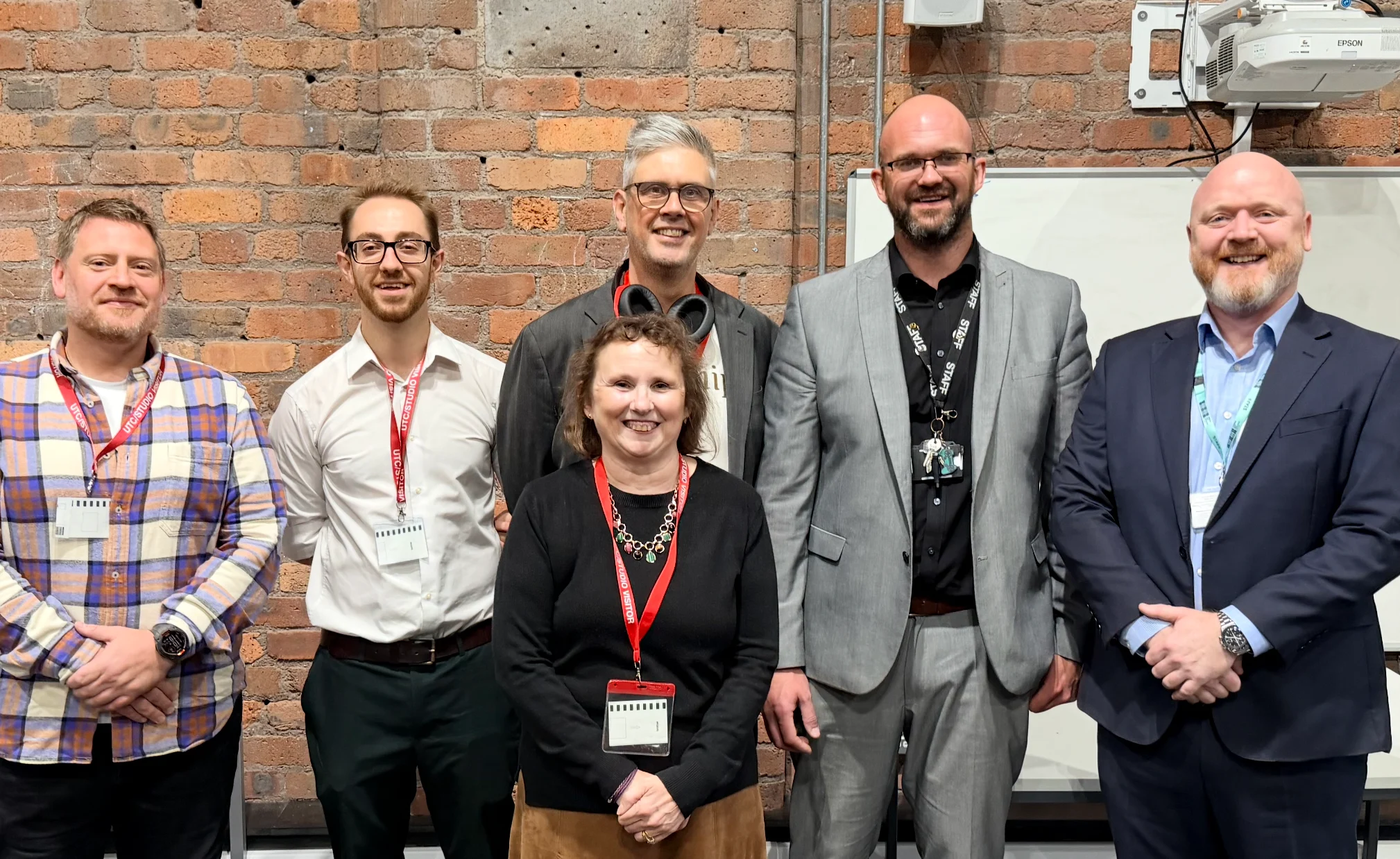
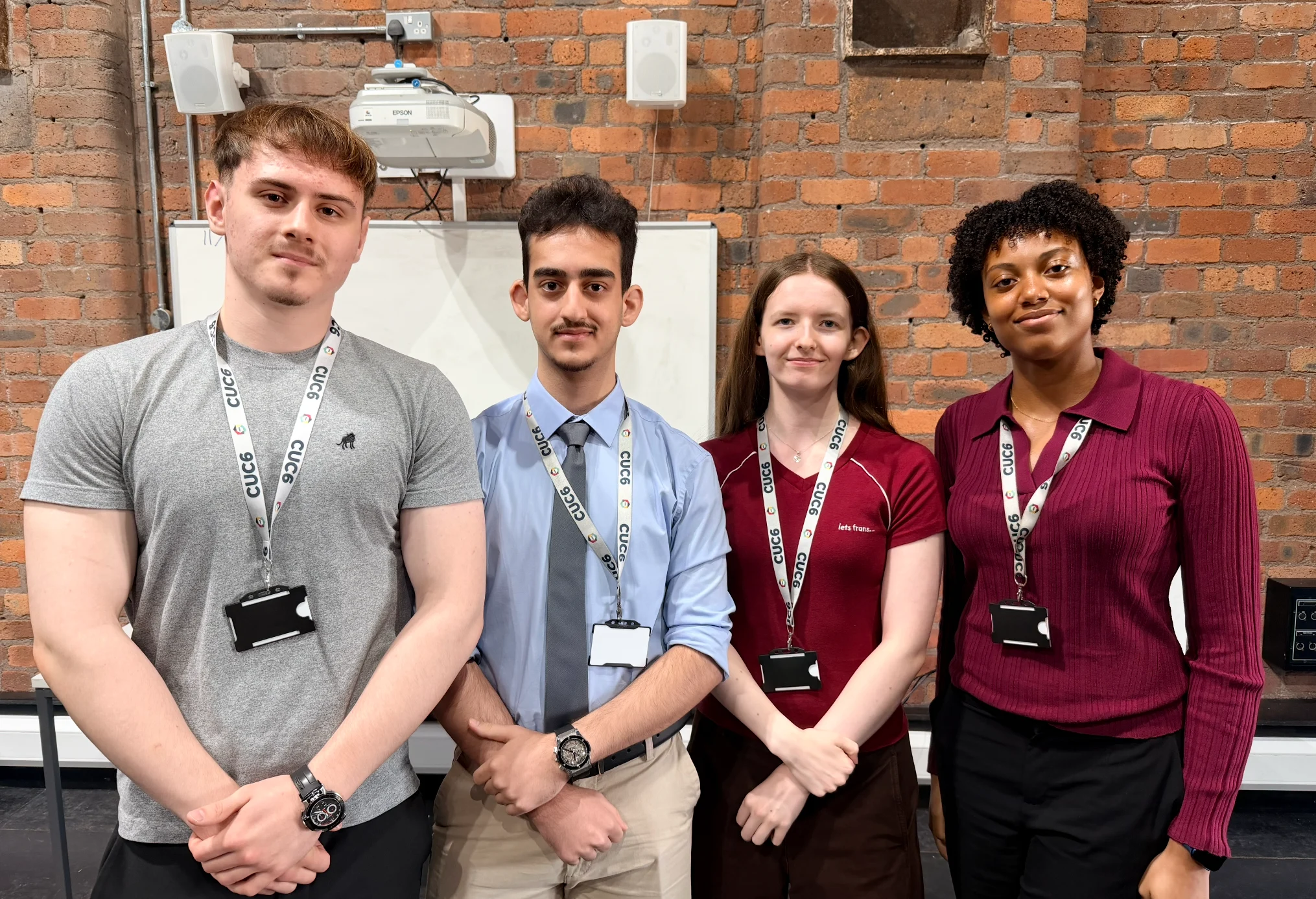
Most importantly, they were joined by students Jack, Mari, Phoebe and Teo.
The question wasn't simply whether AI belongs in education.
It was:
What should AI help us do, and what work must remain human?
The students aren't waiting
Some of the strongest contributions came from the students themselves.
Jack described building an automated pipeline workflow around his studies, using AI to find relevant information and organise it into his own revision hub.
He linked that approach with achieving A and A* level results.
This wasn't simply asking AI to answer an exam question.
It was a learner building infrastructure around his own learning.
Mari described using AI as an “absent teacher”.
When a teacher isn't available, she can use it to work through difficult maths, check where she has gone wrong or ask for a concept to be explained differently.
Not a replacement teacher.
An absent teacher.
Teo told us that around eighteen months ago he had virtually no web development experience.
AI helped him learn to code, understand web development and think about things such as audiences, structure and calls to action.
He is now using those skills to build a website for an organisation.
Three students using the same broad technology in very different ways.
None sounded like young people trying to avoid learning.
They sounded like young people finding new routes into it.
Employers are asking for these skills too
Their experiences become even more significant when viewed against the new Liverpool City Region Local Skills Improvement Plan 2026–29.
Across virtually all of its in-depth employer interviews, businesses identified digital and AI capability as a critical and immediate skills gap affecting productivity, growth and competitiveness.
The LSIP also reports that people entering the labour market are not consistently equipped with applied digital and AI skills.
Some may have theoretical understanding but lack confidence applying AI in workplace situations or understanding its ethical and responsible use.
Liverpool City Region already has more than 3,000 businesses and around 24,000 jobs across AI, digital technologies and advanced computing.
This is therefore not simply an education debate.
It is becoming an employability issue.
We don't need every young person to become a machine-learning engineer.
But increasingly they will need to know how to use AI, question it, verify it, protect information and recognise when human judgement needs to take over.
Where does support become substitution?
James Phillips offered one of the simplest tests of the morning:
Did you do the work?
The issue isn't necessarily whether AI contributed.
It is whether the learner actually understands what they have produced.
Tom Reynolds took that further.
Has AI supported the work that develops the learner, or has it removed that work entirely?
Using AI to explain a concept differently, provide feedback or create revision material can support learning.
Submitting something you cannot explain or reproduce is something very different.
Tom's question was essentially:
Have you still done the work that defines your own growth?
That feels more useful than attempting to divide everything into AI and non-AI.
Heather's challenge: education has to adapt without losing trust
Heather Akehurst OBE brought an important perspective from the qualifications and awarding world.
Education institutions are trying to respond to technology changing far faster than qualifications and assessment systems traditionally do.
She described FE providers seeing students submit AI-generated work that they subsequently cannot explain or defend.
That creates an obvious problem for assessment.
But Heather also highlighted one of AI's greatest educational opportunities: personalisation.
If a learner doesn't understand an explanation, they can ask:
Explain this to me differently.
Simplify it.
Give me another example.
Make it visual.
Test me on it.
That kind of responsive support has traditionally been difficult to provide consistently at scale.
At the same time, she was clear that AI cannot simply be trusted because it sounds confident.
It can make things up.
It can get things wrong.
And the way a question is asked can influence the response.
That means AI literacy isn't only about knowing how to generate something.
It is knowing how to challenge, verify and evaluate what comes back.
Education is responding unevenly
Heather also described a fragmented picture across the education system.
Further education providers are wrestling with AI-generated assignments.
Universities were described as moving further towards treating AI as another working tool, while placing more emphasis on students being able to discuss and defend their work.
Awarding organisations face a different challenge: regulated qualifications cannot simply be rewritten every few months to keep pace with emerging technology.
Damien Maguire brought the issue back to the people expected to deliver that change.
His line was simple:
“Teachers can only teach what they know.”
We cannot expect teachers to prepare young people for an AI-enabled workplace if educators themselves have not had the time, training and confidence to understand the technology.
Teachers need the opportunity to learn too
That point is reflected directly in the Liverpool City Region LSIP.
Its recommendations identify teachers, trainers and educators as needing capabilities including applied AI in curriculum design, AI-assisted assessment and feedback, safe and ethical AI use and helping learners use AI responsibly in workplace contexts.
The LSIP also calls for AI literacy, ethical AI use and practical automation skills to be embedded across Levels 2–6, with the stated outcome of:
“Graduates ready for AI-enabled workplaces.”
That closely mirrors what we heard in the room.
The Studio School is already beginning its own AI for Good CPD activity.
James talked about prompt writing as a practical gateway skill for staff.
He also gave a useful example of both the opportunity and the risk.
Using AI, he had helped create and resource an entirely new course in around three weeks.
But at the point of the discussion, he estimated he had checked around 80% of it.
Extraordinary speed.
But still a human responsible for the quality.
As James put it, the balance is between time, productivity and quality.
Critical evaluation becomes fundamental
Damien argued that critical evaluation cannot be assumed.
Not among students.
And not among teachers.
AI systems can present incorrect information convincingly. They can invent details and they can produce different responses depending on how questions are framed.
If creating an answer becomes easier, the ability to interrogate that answer becomes more valuable.
That could become one of the most important skills we teach.
Not simply:
How do I use AI?
But:
Should I trust this?
EdenFiftyOne: constrain the technology around the purpose
That need for trust also shaped Tom Reynolds' contribution.
EdenFiftyOne is building technology around a specific education challenge: improving literacy support without creating an impossible additional workload for teachers.
Its approach is deliberately different from simply putting an unrestricted general-purpose AI in front of learners.
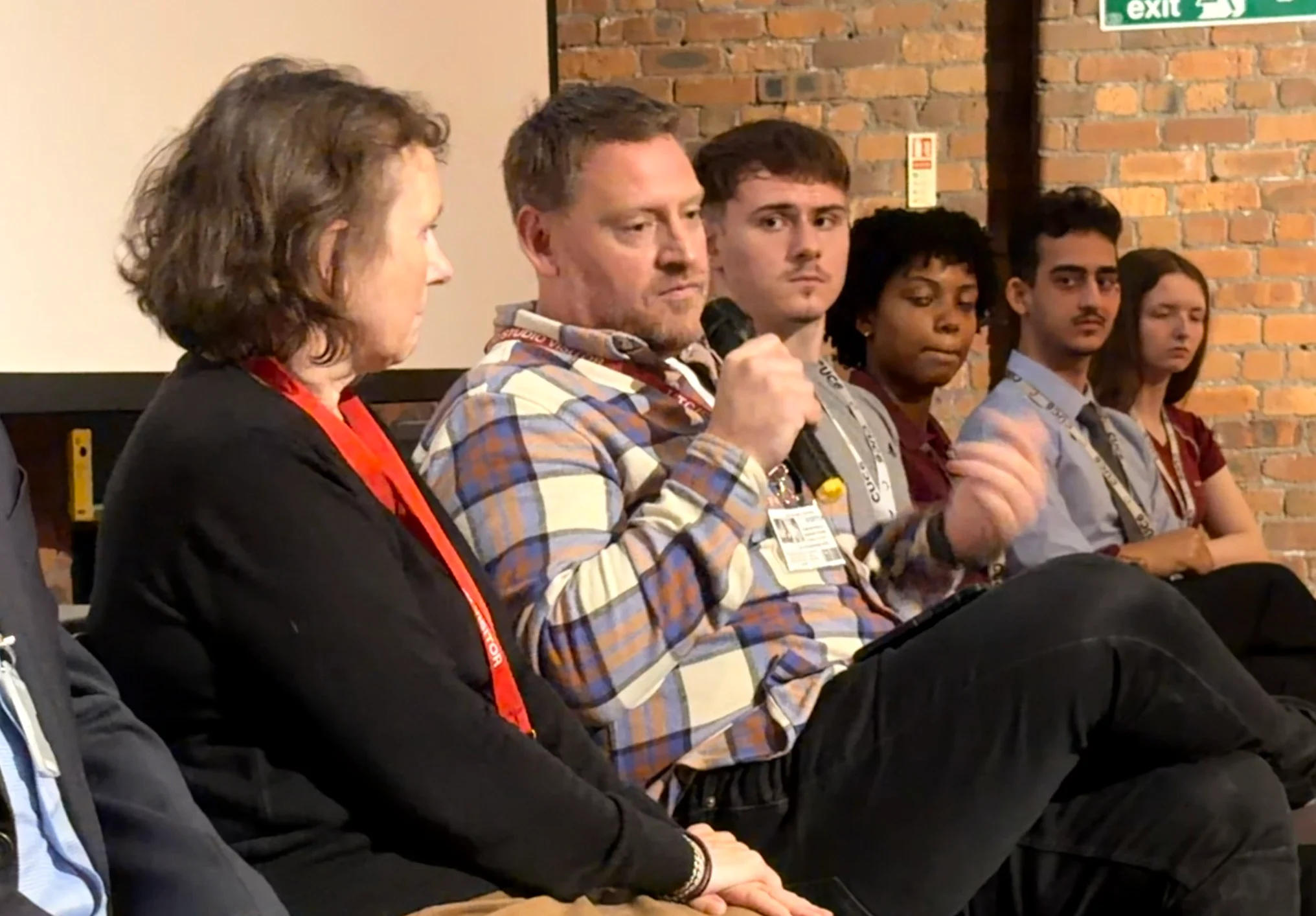
Tom described its system as being constrained around literacy education:
“The only thing that our AI knows is literacy skills education.”
That leads to an interesting question.
Instead of trying to control an AI capable of accessing almost anything, could schools increasingly use smaller walled-garden systems built around defined educational purposes?
Curriculum.
Approved resources.
Learning standards.
Specific skills.
Specific outcomes.
Tom described the challenge of controlling unrestricted AI as trying to “rein in infinity.”
A smaller, controlled environment begins from a different position.
Data matters too
The conversation also moved beyond what AI knows to what AI knows about us.
Tom raised the importance of data sovereignty, particularly when education systems may hold information about attainment, learning difficulties or young people who are potentially vulnerable.
James acknowledged the practical reality.
Schools already operate heavily within Microsoft and Google environments and face budget, infrastructure and capability constraints.
Nobody suggested every school should immediately operate its own language model.
But the questions need to become routine:
Where does student data go?
Who controls it?
What can a model learn from it?
What happens to that information afterwards?
Damien gave the audience a particularly simple exercise: ask the AI system you regularly use to describe what it knows about you.
For many people, the answer might be revealing.
What the students want
Towards the end of the discussion, the students' asks were remarkably clear.
Teach us the fundamentals.
Young people need enough understanding to enter further education and employment confidently.
Trust us enough to experiment.
Put appropriate safeguards around AI, but don't make blanket prohibition the default.
Show us what good use looks like.
Teachers and other adults need to model thoughtful, critical AI use rather than simply using it behind the scenes to generate material.
Mari made an important point.
If students discover their lessons are simply being generated by AI without being properly checked or shaped by the teacher, they may begin asking what the teacher is bringing to that relationship.
That's a fair challenge.
AI should help teachers teach.
It shouldn't make teachers less present.
The gap is already visible
Put the different pieces together and an interesting picture emerges.
55% of employed and self-employed people surveyed already report using AI for work or education.
Yet only 11% of UK businesses with 10 or more employees say more than half their workforce has received AI-related training.
Locally, employers across virtually all of the Liverpool City Region LSIP's deep-dive interviews identified digital and AI capability as an immediate skills gap.
And the students in the room are already experimenting, building and learning independently.
The challenge isn't getting AI into people's hands.
It is giving people the skills, judgement and confidence to use it well.
What does AI for Good mean in education?
Tom closed the discussion with perhaps the clearest definition of the morning.
Technology for good should ultimately be about elevating and enriching the human experience.
For leaders, AI could provide better information for better human decisions.
For teachers, it could remove repetitive administration and return time to teaching.
For learners, it should create agency, confidence, curiosity and opportunity.
That gives us a much better test than simply asking:
Did you use AI?
Instead:
What did AI enable you to learn, understand or create?
Did it help a teacher teach?
Did it help a learner understand?
Did it create access to support that wasn't previously available?
Did it encourage curiosity rather than dependency?
Because, as Tom put it:
“Tech for good isn't about enabling tech to do the work for us. It's about enabling us to do more good work.”
Perhaps the next phase of AI in education isn't deciding whether the technology belongs there.
It is accepting that it is already here and making sure students, teachers and institutions have the skills, safeguards and critical judgement to use it well.
Related GoodShip* Activation
AI Activator
Don't just learn AI. Do something with it.
Explore AI ActivatorRelated GoodShip* Activation
KinShip
A community for people building useful things together.
Explore KinShipRelated GoodShip* service
Consultancy
Explore ConsultancyRelated GoodShip* service
Empowerment
Explore Empowerment
Gavin Sherratt
Founder · GoodShip*
Team member
Gavin founded GoodShip* to bring good people, good ideas and useful technology together around work that can make a genuine difference.
LinkedIn